Category: Dailies
Ron Santo And Baseball’s Shame
It should go without saying that the true tragedy is the death of Ron Santo at the age of 70 after a brave and inspirational fight against diabetes and the amputations of both legs it necessitated.
Performance Enhancing Drugs – In 1894?
What’s fun about turning over baseball’s rocks is that it often turns out that beneath them there are…other rocks.
Two of the Giants
made the telling plays in the Temple Cup games, just as they did two weeks ago
in Chicago. … “You wish to know why these two particular men, and
how they did it? This is the solution.” The speaker held between his
finger and thumb a diminutive three-cornered blue phial. He continued:
“May be, you all do not know that R—- … is a pretty good doctor.
… When we got to Washington he asked W—- and myself to go with him one morning
to call on a doctor who is supposed to be thoroughly up in Isopathy. The visit
was most interesting, and when we left, R—- and W—- had promised to test the
virtue of the elixir contained in these little bottles. The opportunity
occurred in Chicago September 18th. The score was 1 to 1, each team having
tallied in the sixth. R—- was now up, but before taking the bat I saw him pass
something to his mouth and then look up for quite two minutes. His eyes
brightened and the veins across his temples and the arteries down his neck
knotted like cords as he stood at the plate. … R—- met the ball … and he put
his 230 pounds in the lunge he made; … the ball was bound for the outer world,
and would not have stopped if the fence had been twice as high. Three runs were
tallied, and, as it proved, they were just about the number needed…They used
the Washington physician’s elixir in every Temple Cup game, and I tell you that
is the secret of the Giants holding that trophy to-day. R—- and W—- will both
tell you so.”
Shieber goes on to source what the miracle “Isopathy” elixir was supposed to do (provide accelerated heartbeats and thus an instantaneous surge of strength), what it was supposed to be made of (mashed up ox brains), what it actually was (nitroglycerine), and who apparently used it (Amos Rusie and John Montgomery Ward).
A cardiac specialist friend of mine says it must’ve been 100% placebo, or, maybe even pure luck that it didn’t kill either of the 1894 Giants. Patients given nitroglycerine for heart-related chest pain are urged to lie down immediately because blood pressure drops.
Still, psychology tells us that placebos often work – and in the 1880’s and 1890’s when “glandular extracts” from animals were supposedly the cutting age of medicine, this might’ve been more true than at other times. Ironically, while Rusie and Ward were very-forward thinking in terms of supplements, they should’ve looked backwards. In 1889, future Hall of Famer Pud Galvin openly enrolled in “medical experiments” in Pittsburgh testing the efficacy of testosterone drawn from monkeys.
A good moment to pause for illustrations: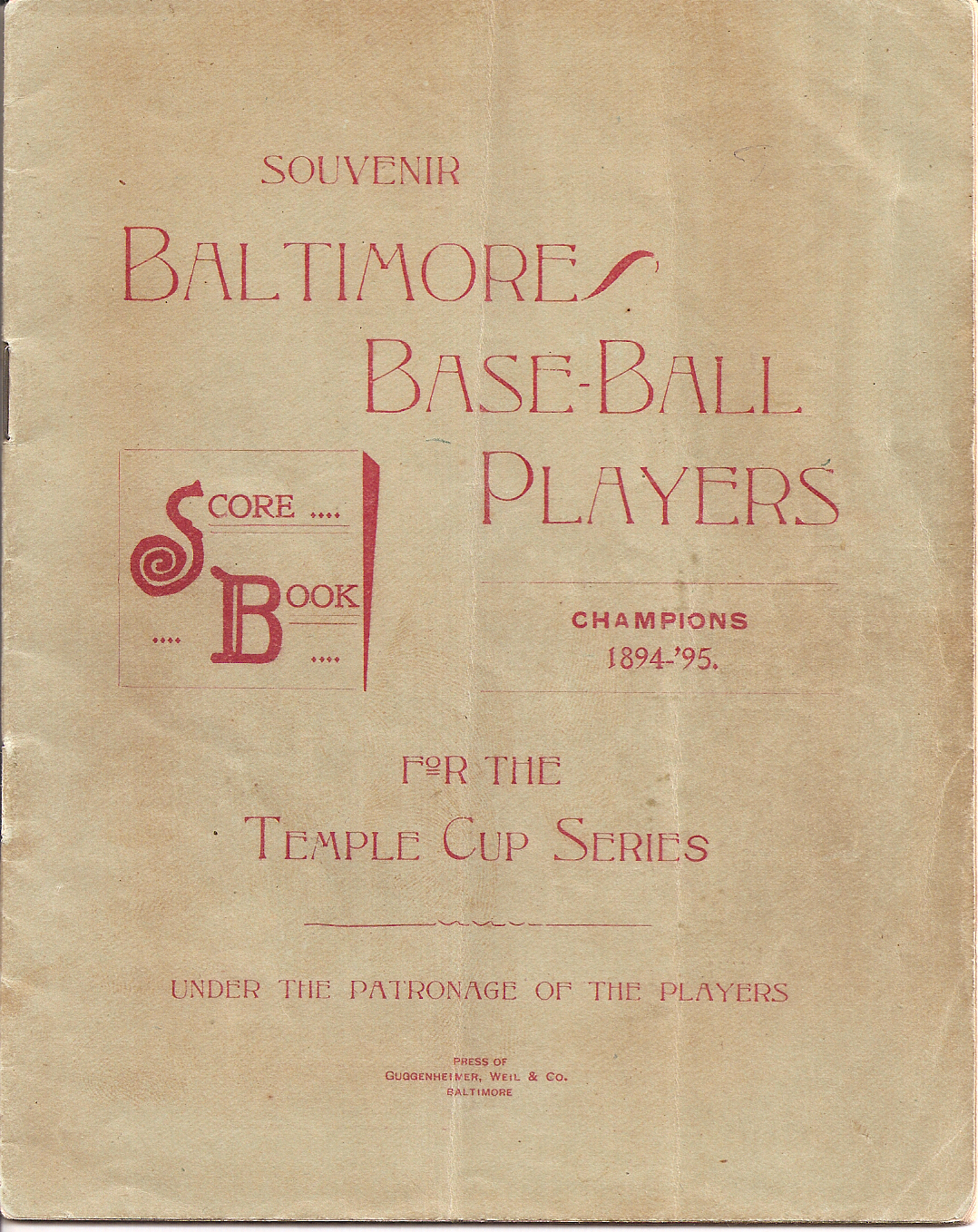
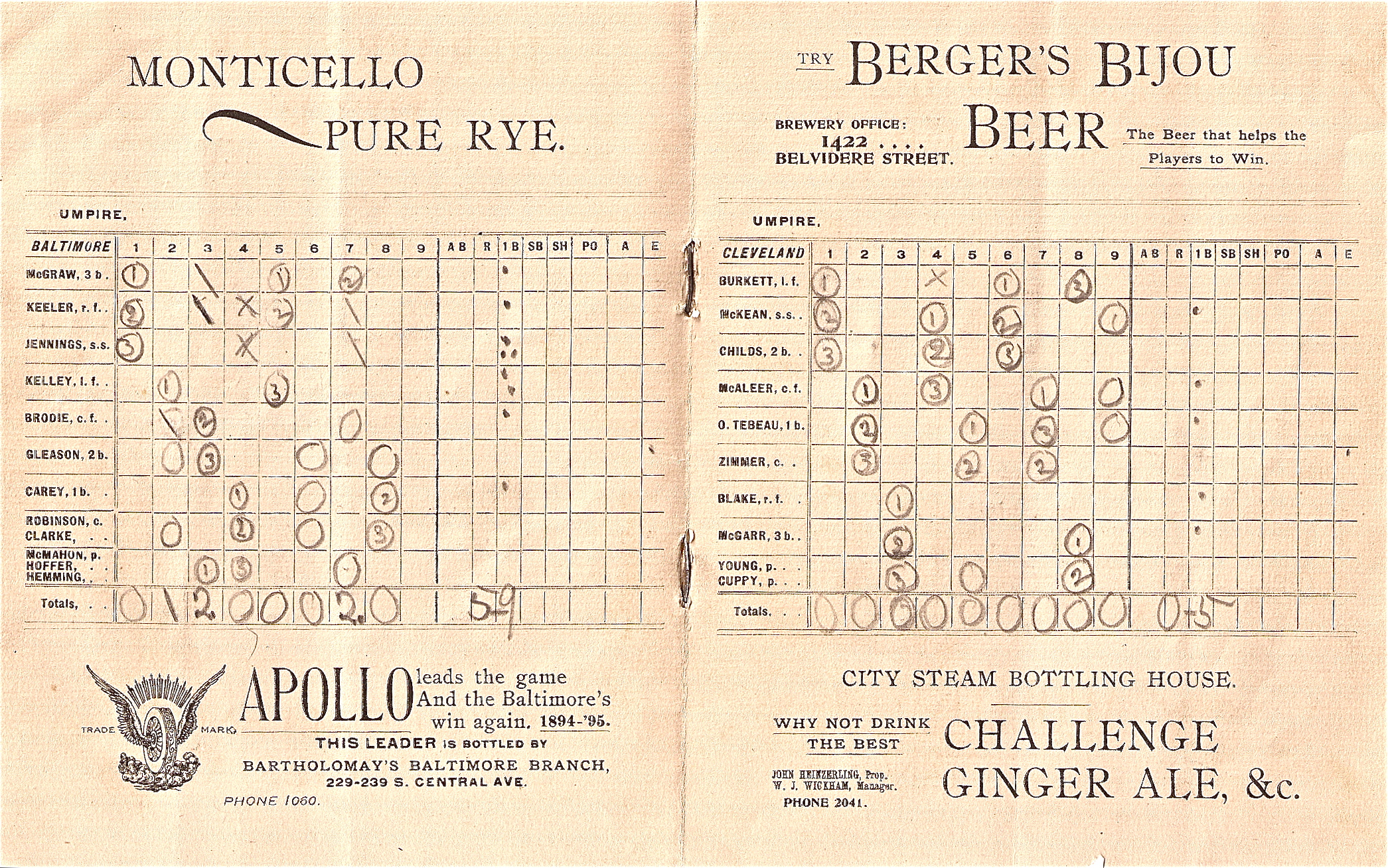
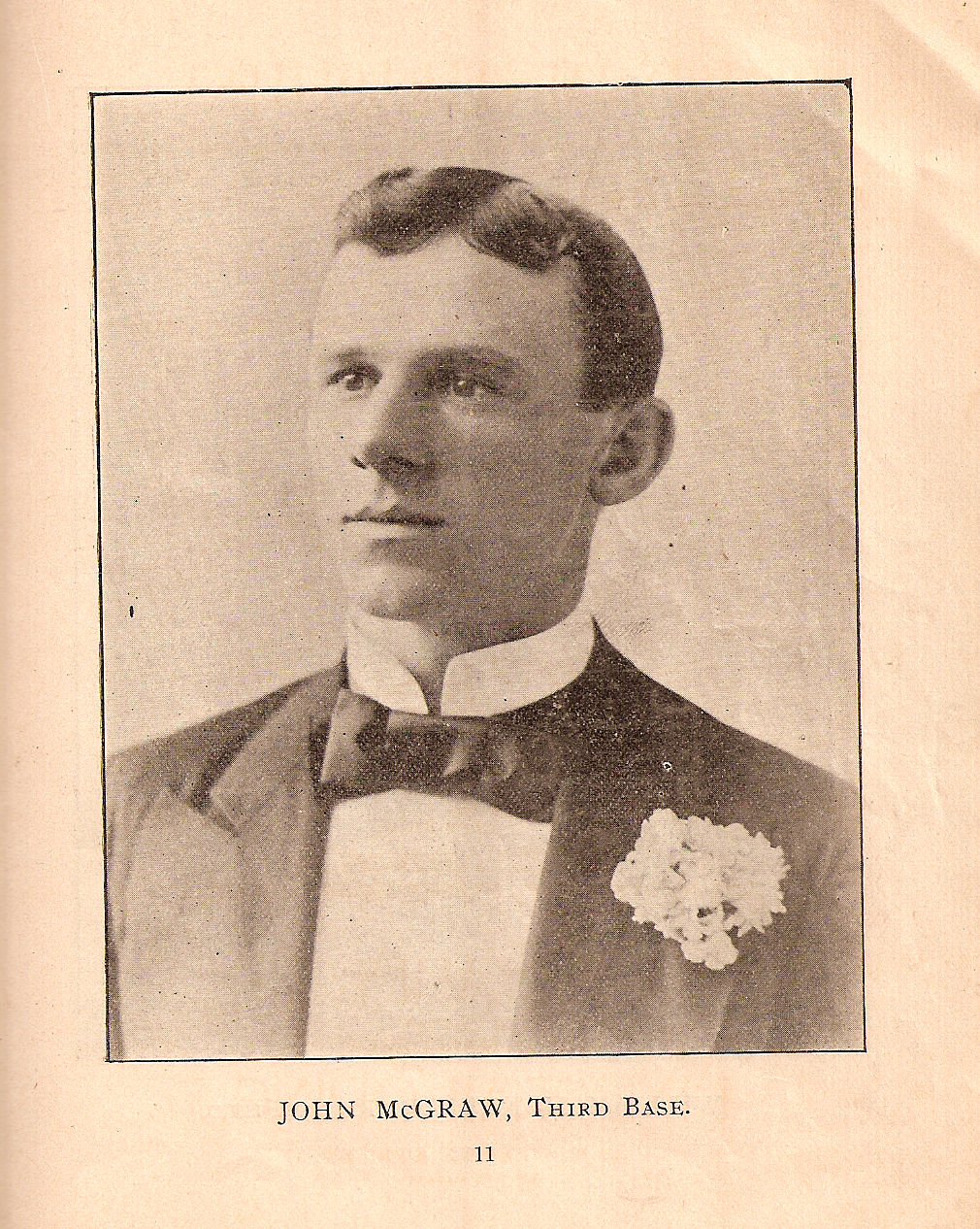
More On Jeter And 1894
It would appear that the Derek Jeter mess is down to one escape route.

Deputy Sheriff Maguire yesterday sold out the office furniture, type, and plant of The Illustrated American at 209 and 213 East Twenty-third Street, for about $1,100.
…the victors and the vanquished saw “Dr. Syntax” at the Broadway Theatre, and afterward recounted some of the pleasant experiences of last season, over foaming bumpers of Nick Engel’s beer. In a few days the players will start for their respective homes, and the baseball cranks’ occupation will be lost until gentle Spring starts again.
This Just In…From 1894
You might not like the Wild Card, and you might not like the World Series extending into November, and you might promise you will not like this expanded version of the playoffs Bud Selig is hinting at. But your displeasure will be nothing compared to the most ill-fated of all of baseball’s post-season formats: The Temple Cup.
The team that won the pennant would play the team that finished second in a best-of-seven series. If the first-place team declined to play, the second-place and third-place teams would compete. If the second-place team declined to play, the pennant winner would play the third-place team. If the…well, you get the idea.
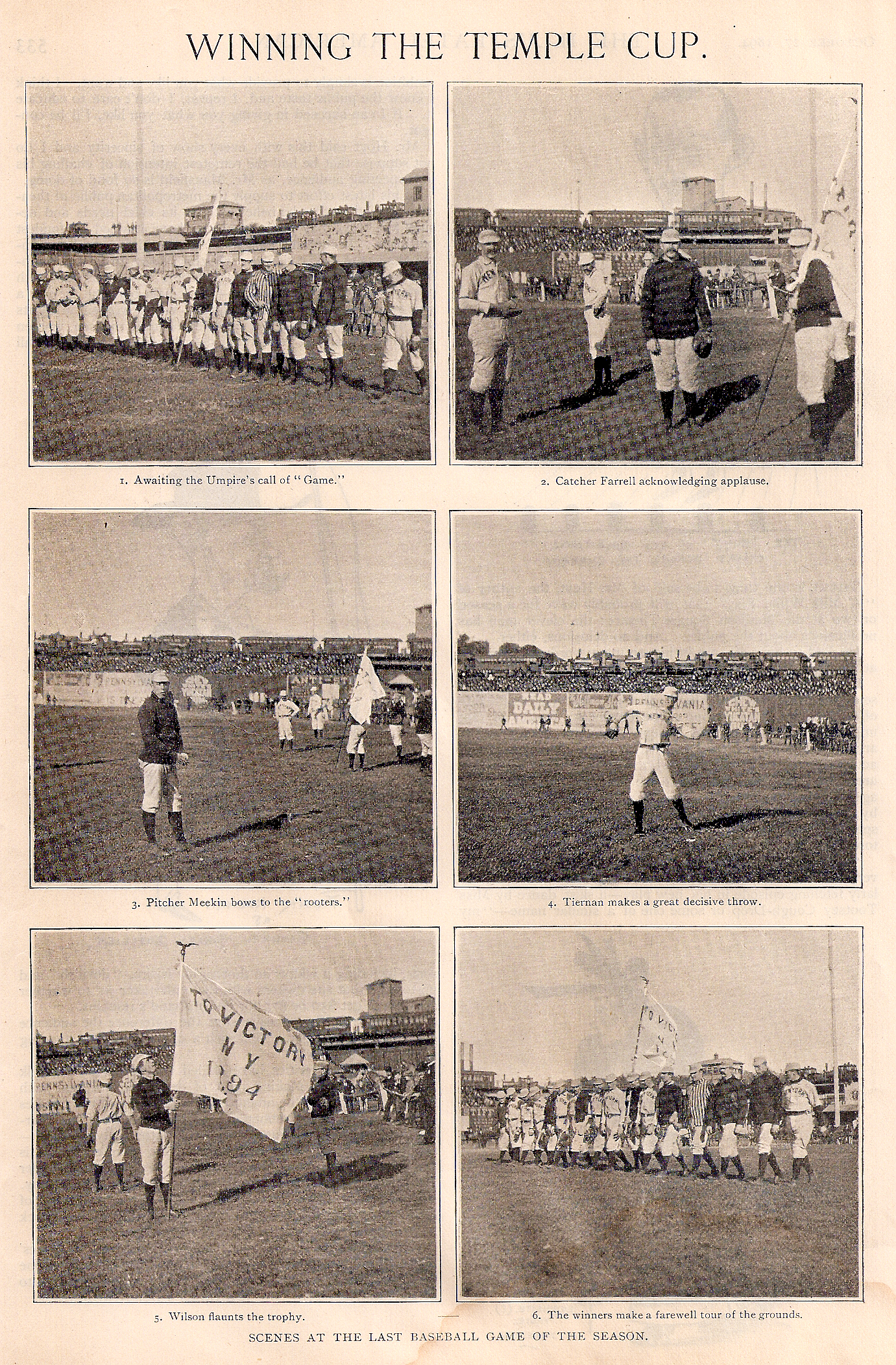
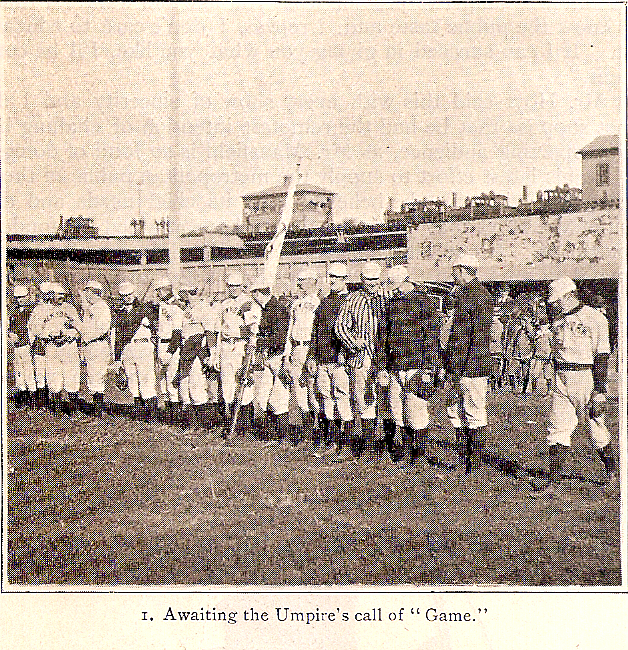
with the big glove is catcher Duke Farrell, and, to his left, in the other sweater, is Game Four starting pitcher Jouett Meekin. At the far right of the picture, seemingly just ambling up to the line, is no less a figure than Hall of Famer John Montgomery Ward. Ward is not only the Giants’ second baseman and manager, but the organizer of that first players’ union that precipitated the end of the game as they knew it and made the Temple Cup necessary.


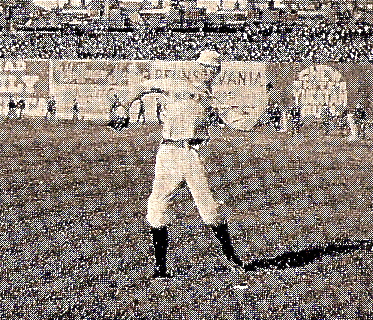
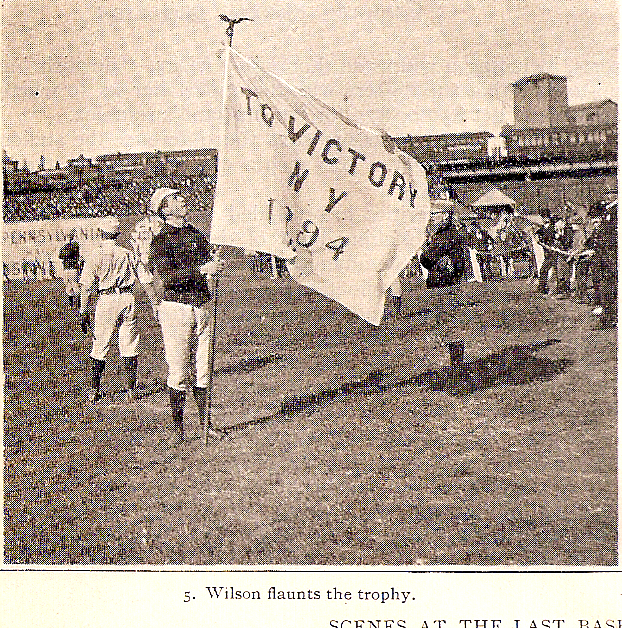
During the seventh inning, two horses escaped from the grasp of their owners behind the ropes in center field, delaying the game several minutes before they were caught.
 Of course, they would have had to have taken their farewell tour before the game.

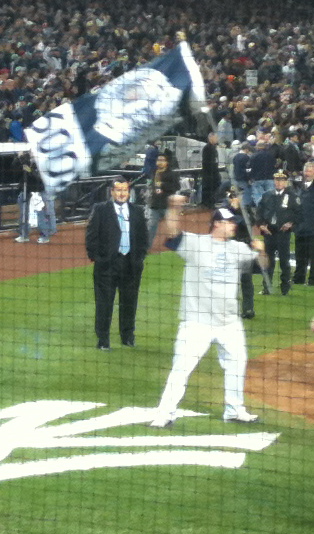
What Price Jeter?
Let’s put aside for a second the premise that Derek Jeter believes he should be baseball’s second-highest paid player after a season in which he batted .241 against right handed pitchers. Let’s not address what it must look like in that higher plane of consciousness in which a team should pay a man $25 million a year through his 42nd birthday not because he is performing at that a supreme level of production, but out of loyalty and recognition of past greatness, and because he deserves to make nearly as much as Alex Rodriguez does.
Jeter And The Yankees: The Back Story
This is the way the story was told to me by one of the people they turned to.
Abner Doubleday Did Not Invent Baseball
I’ll just repeat that:
The Conscience Of Baseball, 1995
There wasn’t a lot of principle flying around in the winter of 1994-95.
A Note About Buster Posey
Frankly, on the afternoon of March 21, 2009, I really wasn’t sure who Buster Posey was.
Bill Shannon Has Died
No matter what the game was, how long it dragged on or how quickly it passed, how unpleasant the weather or how perfect the setting, it was always better if I got to say hi to Bill Shannon.
He was already a veteran of the press boxes at Shea Stadium and Yankee Stadium and Madison Square Garden long before I got into this business in 1979. He knew virtually everything that had ever happened in baseball and probably just a little bit more about everything that had happened in New York sports reporting.
The topics occupied him, mystified him, energized him, endlessly. Off-and-on for several years, we individually dabbled in trying to unearth such mysteries as who had preceded the legendary Public Address Announcer Bob Sheppard at Yankee Stadium before Sheppard got the job in 1951. Off the top of his head Bill went through the identities, resumes, and secret lives of Sheppard’s counterparts at Ebbets Field and The Polo Grounds, and details of the days when the Yankees refused to install a PA and stuck to having men walk around the field with megaphones, and then after rolling out all this information he said, with no sense of irony, “but let me look a few places.”
We were still engaged in what had become a near-decade-long search for the etymology of the official scoring system by which the shortstop is numbered “6” and the third baseman “5” (as in “6 to 3 if you’re scoring at home”). I had found an 1890’s Giants program with “how to score” instructions that indicated it had been the other way round. “Ah, yes,” Bill bellowed, in an accent I knew from my childhood to be authentic New York City, “At some point it was. What we need to do is find out when it changed.” He then launched into a story he’d been told by a veteran writer with whom he had worked in the ’60s, that was from itself from a veteran writer from the teens, who had heard it from one of the combatants, of a near fist-fight between the two official scorers at an early World Series, one of whom adhered to the Midwest preference of “5” for the shortstop, while the other one came from the Northeast, where he had always been “6.”
These tales, these miniature trips through time, were at Bill’s fingertips. They were instantaneous and generously offered and if they could help you, they were so much more joyful for him.
Bill could do this about any topic. And any crumb of research that might enlighten him on something he didn’t know – or better yet, something he mistakenly thought he knew everything about – was like a gift of a gold nugget to him. He was publishing a brief (and impeccable) guide to official scoring (and he was the senior in the field at both New York ballparks, and I never heard anyone complain about one of his decisions) and asked me if I could help him with identifying the ones at some of the early World Series. I dug up the information fairly easily. He treated it as if I had written half the book for him.
It is impossible, it is personally physically painful, to write here that Bill Shannon died in a fire at his New Jersey home this morning, a fire from which his mother was rescued. He was 69 years old. He had worked for everybody: UPI, AP, the local papers, his own stringing service, Madison Square Garden, at least two soccer leagues, Who’s Who In Baseball.
Loss is a part of everything and everywhere, and I’m confident I did not see Bill once in 31 years outside of one of the Stadiums. But as I write this I literally cannot imagine walking into either of the New York press boxes next year knowing I will not see this lovely man again.
 Baseball Nerd