Tagged: Keith Olbermann

F-Rod?

Lost in the adventures of Luis Castillo at Yankee Stadium last Friday was the reality that even if Castillo had made a game-ending catch, Francisco Rodriguez would have begun tonight’s Mets game in Baltimore having recorded consecutive saves in which he had allowed two base runners and just escaped with his life.

Tonight he did not escape, and so K-Rod has, in four appearances, one Save, one other clean 9th, two combination Blown Saves/Losses, and one pre-game argument with a guy 35 pounds heavier than him. This is no more evidence that he’s hurt or in pitching distress, than the fact that somebody finally roughed up Trevor Hoffman suggests that Hoffman is in trouble.
But in the superheated atmosphere of New York, both questions will be raised about Frankie, especially in the context of the Mets’ bullpen troubles, which have endured for a decade and proved fatal the last two seasons. The more important issue, of course, is what exactly would the Mets do if there really was something wrong with Rodriguez?  J.J. Putz is out, perhaps until September. Bobby Parnell is a rookie who has been more than challenged by merely the 8th Inning role. Sean Green has been strong for a month, and in ten save opportunities over four big league seasons, he has converted only one of them, and Pedro Feliciano is only four-for-twelve.
Minor league resources? The “Closer Of The Future,” Eddie Kunz, is working set-up at Buffalo, with major league journeyman Elmer Dessens finishing the games.
There are stories that Billy Wagner has found the Lourdes of baseball and expects to be pitching in big league games in 30 days. What kind of story would it be if the Mets really needed him?

Johan Santana Must Be Hurt (Updated With Quotes)

This does not come from Mets sources, and it does not come from ballpark speculation, and it certainly does not come from the player himself, but barring an extraordinary breakdown in the mechanics of the game’s most-mechanically sound pitcher, Johan Santana must be pitching with an imposing injury.
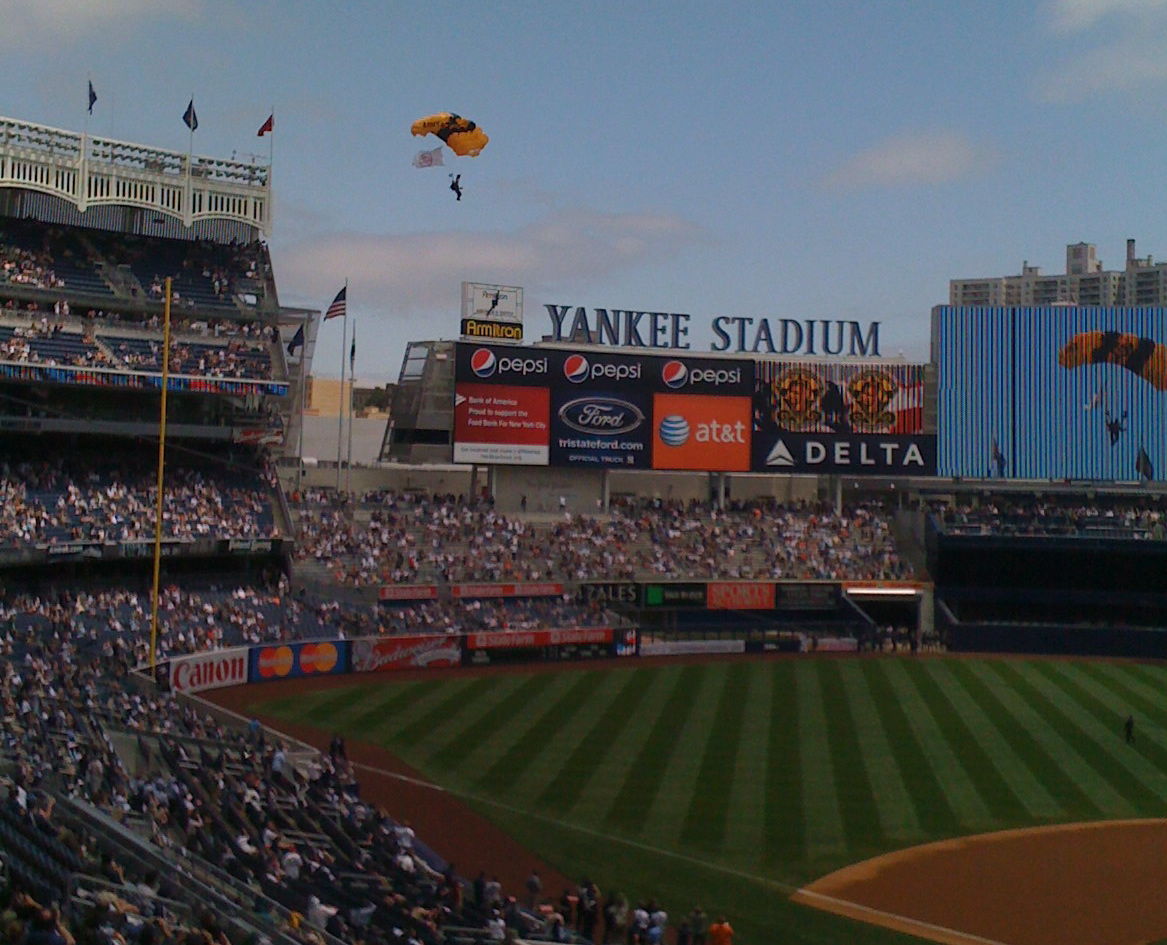
This thought had been in the back of my mind since a fired-up Santana virtually willed the Mets to a victory in Boston, then followed that with a six-walk game against Washington on May 27, and finally his four-homer victory over the Phillies last week. Having now gotten to see Santana from field level during his implosion this afternoon at Yankee Stadium, there is not only the loss of velocity suggested by the radar guns, but he also seemed to have a softer break on his breaking stuff, and he clearly had trouble keeping the ball down. Many of the Yankees’ nine hits would have been swinging strikes on Santana pitches in the dirt, if he was 100 percent. Hideki Matsui’s homer might as well have been hit off a tee.
The one flaw in Santana’s makeup is the gung-ho attitude that has otherwise contributed mightily to the making of a superstar. If you will remember, he just missed single-handedly forcing the Mets into the playoffs last year with one of the great pitching performances in Mets’ history, his shutout of the Marlins on the next-to-last-day of the regular season. 
That was on Saturday. On Wednesday, Santana was being operated on to repair a torn meniscus in his left knee. He had been pitching through its pain for the last month of the season. He had come back from a 125-pitch performance to mesmerize the Marlins, and had done so on three days’ rest.
And all that time, he had been pitching while hurt.
If he’s doing it again, the Mets’ 15-0 loss at Yankee Stadium will have been the least of their problems.
UPDATE, 5:00 PM EDT: Post-game, Santana insisted he has no arm problems nor any other injury (“no, not at all.”). See if you can spot the phrase that might make Mets’ fans doubt him:
“It was a bad day, worst of my career. I’m fine, it’s not excuses or anything, it’s just that today was a tough day.” Was his velocity down? “No, not at all. I made a few mistakes locating my pitches and if you are not able to locate the ball around the plate, that’s what’s going to happen.” No injuries at all? “I had some soreness in my back about a month ago. We battled through it. I had a split nail on my finger. We battled through it.” No lingering effects from either of those small problems? “No, I’m fine. We battled through it. Not a dead arm, not even close.”
AND THE NOBEL PEACE PRIZE GOES TO:

Jose Veras of the Yankees and Mike Pelfrey of the Mets seem to have gotten in between Francisco Rodriguez and Brian Bruney, just in time. Bruney’s remarks about K-Rod’s not-entirely-deserved “L” on Friday had inspired the Met closer to confront Bruney in the outfield during batting practice. K-Rod was giving away at least three inches and at least forty pounds to Bruney… Top Observation from the Mets’ on the new ballpark in the Bronx comes from veteran Mets’ media relations guru Jay Horwitz. Asked what he thought of the place, Jay said, with a tone of mild surprise, “It looks a lot like the old Yankee Stadium.” Told that that was the point, Jay didn’t miss a beat. “Oh, well, then they did a really good job”… whatever comes of Santana, the Mets continued to struggle defensively. Luis Castillo dropped a skydiver:
IMG_0749.JPG

Marquis Performer

If you’ve seen Baseball Prospectus you may have waded through my overly cute introduction – at minimum you know I am awed by the accuracy of the forecasts of the figure filberts. 

But every year, amid the Nostramadus-like exactitude of most of the player line previews, they miss by more than a mile. Last year it was Cliff Lee. This year an early front-runner for the 2009 version is Jason Marquis.
The Rockies’ righthander is now at 8-4, 3.98, 1.34.
BP predicted 6-10, 5.57, 1.61.
This is not to say they could not still come awfully close. The forecast was for 21 starts and 11 relief appearances. Marquis would not exactly have to go up like downtown Chicago in 1871 to go 0-6 the rest of the year, fall out of the rotation after nine more starts, and inflate the ERA by not much more than a run and a half. Manny Parra could offer him instructions.
Still, as I noted in that intro, spooky things do seem to follow when the forecast maximums are reached. Tim Hudson was expected to end up 12-10 last season; he got to 11-7 and then his elbow went blooey. Mr. Marquis is now two wins past where he was supposed to end up. 

Helmets And Closers

It’s 30 years now since the last major leaguer stepped to the plate without a batting helmet, and 38 since the helmet became mandatory. The mandatory earflap celebrated its 25th anniversary last year. But batters have used helmets (or plastic cap liners) since the ’40s, and their invention and use pre-dates even the death of Ray Chapman from a pitch in 1920, to Roger Bresnahan, Hall of Fame catcher of the Giants, in 1907.
Defensively, catchers turned to helmets, then cages. The mid-50s Pittsburgh Pirates wore them exclusively, in the field and at bat, pitchers included. While that idea was abandoned, largely based on the argument that fielders had gloves with which to protect their heads, John Olerud used one to protect his skull – at high-risk for damage after an aneurysm – while playing first base. After the awful death of Mike Coolbaugh, struck by a line drive while coaching first in a minor league game in 2007, helmets for coaches became mandatory last year, and by this one, they had begun to look perfectly normal (no matter what Larry Bowa says).
So, here is a question that popped into my head during a recent game: why don’t the umpires wear helmets? Surely the ones at first and third are at nearly as much risk for being hit by a line drive against which they are gloveless, and helpless, as a coach. The argument, of course, is that umps are trained pros, and it’s not like we’ve seen a frequent problem with them getting leveled. Just as we hadn’t seen one with coaches before Coolbaugh.
For that matter, why don’t we bite the bullet on the next most vulnerable in the equation? The catcher’s body is almost 100 percent covered, the plate ump is well-wrapped, and the batter can arm himself in everything short of cyborg components. Why don’t we mandate helmets for the individuals who are the fourth-closest to the violence of the meeting of bat and ball – the pitcher? We haven’t seen enough pitchers knocked down by return fire? 
The obvious point against, of course, is that most of those pitcher injuries are to the face. Then again, no pitcher has had the opportunity to use “ducking out of the way” as a reaction to a line drive.
And if there is a cosmetic argument (and, face it, the new articulated helmets look laughable), certainly we have not reached the all-time climax of helmet design. They can doubtless be made more ventilated, be lined with sweat-absorbing material, fixed into a more cap-like shape, and generally be redesigned so as to make their wearer look less like the Great Gazoo.
Besides which, why does a batter with a helmet look right, and a pitcher or an umpire with one look less so? 
Because we’re used to it.
NO HELMETS MAY SAVE THEM:

Watching the Nationals first sign, then promote, ex-Royals closer Mike MacDougal, and considering the maelstrom that their bullpen has been, I wondered when Manny Acta would put him into a save position. Friday night, he retired two Mets, including a creaky Gary Sheffield on strikes, on six pitches. Then Joel Hanrahan looked even better in the 9th, yet Acta mysteriously brought his shaky closer back for the 10th, and Hanrahan got lit up like the Capitol Dome.
This is not to portray Hanrahan as Mariano Rivera. But if the man has the tools to do the job and has just done it splendidly — if the question is confidence — get him out of there. Treat him like a real closer (pitch one inning, limit to save opportunities) and maybe he’ll become one. Hanrahan’s previous outing was with the Nationals trailing and the argument that he needed some work was valid, except that that was the day of the San Francisco/Washington day/night doubleheader and this was only the first game. What if Hanrahan had been needed in the second game?
In short, was Acta looking for a new reason to break-up with Hanrahan? Were he and his new pitching coach Steve McCatty setting up Hanrahan to fail? You pull your closer after he looks bad in two non-closing situations?
MacDougal became McCatty’s project in Syracuse and if he succeeds he could mean McCatty has the job long-term. There’s nothing wrong with that, especially if McCatty has helped MacDougal reclaim his career. This is the MacDougal who spent nearly all of last year in the minors, and who was released by the pitching-challenged White Sox a month ago. And you have now destroyed Hanrahan, twice, in nine weeks. 
To whom do you go if MacDougal fails? Joe Beimel? Kip Wells? Julian Tavarez? They’re all in that Nats Closer Alumni Association. Ron Villone? He’s been superb in the Washington bullpen, in a role he has performed for twelve seasons now – during which he has racked up is career total of seven saves.
In other closer flux news: Our fellow MLBlogger and Phils’ correspondent Todd Zolecki insists Charlie Manuel is eternally committed to Brad Lidge. But his colleague Joe Frisaro has a significantly less-ringing endorsement of Matt Lindstrom by Fredi Gonzalez. In that construction, Fredi, who seems to prefer a little chaos in his bullpen, may get exactly that.
True followers of the Phillies, of course, know that as startling as the statistic is — from perfection over a season to six blown saves in two months — Brad Lidge was hardly perfect last year. The true difference isn’t the number of crises he has created, but the number he has created. As Baseball Prospectus pointed out, his BABIP (Batting Average, Balls In Play) went from .300 during his “bad” year in Houston in 2007, to .302 during his “perfect” one in Philly last year. It’s the homer total that swung wildly: from nine in ’07 to two in ’08, to an astonishing seven this year (for comparison purposes, that’s how many homers Livan Hernandez has given up this year). And the BABIP is now .356?
Tab Bamford has a fascinating idea for the Cubs - but it is one entirely dependent on the idea that Chicago cancelled Rich Harden’s rehab start today only because the feng shui in the stadium was all wrong. The idea that an injury-prone starter with extraordinary stuff might be a better closer than a journeyman with loose-control or a set-up man with pressure issues is, as the blogger notes, not exactly unprecedented in Chicago. Lord knows Lou Piniella has been willing to make this move (Kerry Wood) and its opposite (Ryan Dempster) before. 
All of which raises the question: if you’re the Tampa Bay Rays and you have the Red Sox and Yankees to fend off, and you don’t have time to screw around, and you have a healthy supply of starters, and your bullpen has suddenly gone so south that you hesitate to name a permanent closer, why aren’t you using David Price in that role?
BY THE WAY:

If you’re wondering about the last batter to hit without a helmet, it was Bob Montgomery, Carlton Fisk’s long-time understudy with the Red Sox. He, Norm Cash, and maybe a few others, were grandfathered when the helmet rule finally passed. They wore plastic liners inside their caps. Terrific oddity there considering Montgomery was a catcher.

Mets Sick, Hurt

The New York Mets who aren’t hurt are sick – a flu that raced through the team and the visiting Marlins. And the ones who aren’t sick might have been made so by the continuing struggles of J.J. Putz.

Angel Pagan started hopping after Hanley Ramirez’s fourth-inning double, and quickly exited with what the Mets cheerfully described as “right groin discomfort” (perhaps a subject for a different blog). He was declared “day to day.”
Of course he was. He was a Met position player who attempted to use two limbs at the same time. 
Pagan is only on the roster because of Carlos Delgado’s injury, and was only in the lineup because of Carlos Beltran’s stomach flu. This is his third notable injury in two years in a New York uniform, quite an accomplishment for a guy who was only playing in his 43rd game over that span. Jeremy Reed replaced Pagan, and Fernando Tatis remained available. Ron Swoboda was also in the house at Citifield if it came to that.
John Maine exited after a brief bit of stunting in the top of the 7th. Like Beltran, and Saturday’s Florida starter Josh Johnson, he began to get the icks in the bottom of the 6th, but not quickly enough for the Mets to get up the bullpen. So Maine sucked it up and came out to  the mound in the 7th, tied his shoe, and signaled to the dugout. That gave Jerry Manuel the right to bring Pedro Feliciano in with an infinite number of warmups.
He might’ve tried that with Putz, whose season looks acceptable on paper, but whose stats (1-3, 3.81 ERA, 2 Saves, 10 Holds) hide a worried fear. The Met hierarchy continues to wonder if he isn’t hurt. Entering with a three-zip lead. A walk, two hits, and the inevitable Ramirez first-pitch RBI single off Bobby Parnell, and Putz had given back two-thirds of the lead. The action on his breaking pitches seems to be less than last year before his elbow problems, and his strikeout to walk ratio is now a scary 19:18 (it was 104:13 in 2006; 356:122 lifetime).
Putz exited to booing and an unspoken question that seems to be racing towards Met management: when will they have to start breaking in Parnell as, at minimum, Putz’s co-equal as a bridge to Francisco Rodriguez?
On the other hand, 20-year old Fernando Martinez is beginning to make converts. His 8th inning RBI double opened up a 1-0 game, and while his manager said pre-game that he could not currently call him a “good” defensive outfielder, another part of Manuel’s response – about the team having to bear with him as he grows – suggested Martinez remains in position to claim the rightfield job even when Ryan Church returns.

After All, His Initials Are D.L.

I think Jayson Stark started this Player “A” jazz. I’ve stolen from him before, I’ll steal from him again.

Player “A” has three homers, 11 RBI, and a .295 average in 23 games (just twelve as a starter).

Player “B” has three homers, 15 RBI, and a .209 average in 24 games (but was up to .294 in his last five games).

And it’s good news that Player “B” won’t go on the disabled list, and will return to his team’s line-up this week, replacing Player “A”?

They are, of course, A) Micah Hoffpauir, and B) Derrek Lee. There may be 44 guys in this country not named Hoffpauir who think it would be worth the Cubs’ while to let Hoffpauir succeed D-Lee right now. I’m one of them. It’s tough to think in those terms of a man who slammed 46 homers just four seasons ago. But considering he’s produced only two full, healthy seasons, since (averaging 21 homers and 86 RBI in each) and with this largely untreated bulging disk in his neck, is not likely to make this a third full season, nor reach those production numbers, it’s time to face the fact that he’s no longer among the game’s elite sluggers.

He hit five homers after July 1st last year. He hit .258 “close and late.” He hit .205 against the Cards last year and .239 against the Brewers. As he slides into his mid 30’s you begin to look around and say, salary considerations included, which teams would happily trade their first baseman for him, straight up?

It can get late early out there at first base. The Cubs might have been serving themselves well to put D.L. on the D.L. for two weeks and see if Hoffpauir has the chops on a daily basis, that he seems to offer sporadically. It’s a damn tough thing to bench a richly-compensated player, and a good guy, and a veteran. But, especially without Aramis Ramirez in the line-up, the Cubs need more than the vague hope that their first baseman will be healthy enough to finish the year with 20 homers and 85 RBI. Hoffpauir may not be the solution – two weeks would’ve given Chicago a better ability to guess.

I just don’t think guessing that D-Lee is going to perform worse, not better, requires very much ability at all. 


Manny Being Manny*

* With PEDs.

“U have no idea!” a Red Sox friend texted at the end of last July. “U haven’t heard half the stories. Ones u have r only half the truth.” The trade of texts ended with guesstimates of just how much the trade of Manny Ramirez had extended the lives of everybody in Boston from the team executives to the clubhouse attendants.
These stories constituted as wide a range of accused crimes and misdemeanors as any modern player has ever collected. But none I ever heard included a specific charge about performance enhancing drugs. That there is surprise at the 50-game suspension, at the perfect dagger through the heart of the Dodgers’ perfect start, is about the means, not ends. “Looks like a great team,” a Dodger told me not two months ago in Arizona. “Watch Manny screw it up. He got his money.”
The stories, dating back to Cleveland, ranged from unbelievable/nonsense to just unbelievable. He supposedly shirked, showed up late or not at all, forced the trade, tried to get it undone. Guys in the dugout said they saw him once picking at his nails, his glove under his arm, as a righty made contact and pulled the ball right to him (he made the catch). His personal hygiene was supposed to be indescribable. Teammates wondered if he was “all there.” As late as this spring a Dodger individual predicted a phony injury. His extraordinary natural gifts, they thought, gave him the ability to wallpaper it all. The near-.400 stretch with the Dodgers last year was an indication of what he could do if he was trying – and if he was scared.
There were some specifics. Last July 6th – maybe the first public indicator something was desperately wrong – the infamous Sunday Night game in New York when Ramirez didn’t start, and only appeared as a ninth-inning pinch-hitter against Mariano Rivera with two out and the winning run at second. Manny never took the bat off his shoulder. Not, he got called out on three Rivera cutters. He never moved. Went silently to the plate, left Boston’s last runner of the loss to fade away at second, left without comment for the clubhouse.
Last July 31st, the Red Sox and Pirates and Dodgers beat the deadline and Manny is gone. And the phone supposedly rings in Boston. It’s Manny, shocked into reality. He wasn’t happy, sure, but he was only doing what the agent suggested to get them to pick up his 2009 option (not that the agent suggested all this) and he was really sorry and he would play his heart out and he’d be there extra-early for BP and he was glad the trade hadn’t happened. And the person at the other end of the line needed several tries before he managed to get the idea through to Manny that the trade could not be undone, that he had to move to L.A., that time would not roll backwards just because Manny wanted it to.
That’s the thing that makes it surprising that we are all surprised today. All the stories about Ramirez could be total slanders. The claims about intelligence and hygiene and focus and selfishness could be utter nonsense spread to make those who survived him look better, gentler, more long-suffering. The Cookie Cutter Excuse No. 3 – my-doctor-prescribed-it-it-was-an-accident – could even be true. But the one continuous thread through every tale, true or false, is exactly the explanation for the PED user who gets caught – a presumption of invincibility and an inability to discern cause and effect.
Forgive the anonymity of the quotes – again – but this was in Glendale in March and a Dodger person (sorry) traded a greeting with Manny and then we watched as Manny joined a group stretching in the outfield. “Look at him wincing,” he said. “I’d be concerned but he told me, now that he had signed, and now that he had gotten his timing in the batting cage, since he hated spring training so much, he figured he’d pull a hamstring so he could get a few days off.” The Dodger person looked only at Manny. “He actually told me that. Look at him. He’s practicing looking hurt.” 
I offered that he saw the new contract not as payment for services to be rendered, not as a lifeline to encourage a repeat of last year’s intensity, but as just desserts for what he did last year, that there when you were Manny Ramirez there were no incentives, no forward-thinking. The Dodger person squinted out towards number 99, and finally answered. “Yes. I think that may be it. But who (expletives deleted) knows. When they said that this was ‘Manny being Manny’ in Boston, we had no idea just how much that meant.”
Apparently none of us did.

Managers (Updated)

I’ve mentioned elsewhere that annually, Terry Francona lets me sit with him, on the bench, during a spring training game. This is half out of friendship and half, I think, to remind me how little I actually understand about managing – or baseball itself – compared to the pros.

Having acknowledged that, and presented the caveat, I’d still like to point out that actual major league managers have done the following things in the last few days:
Mike Scioscia sent poor Brandon Wood back to the minors – having given him, I believe, three starts during two weeks in the bigs, during which he hit the ball with authority and acquitted himself well in the field – so he could bring back Reggie Willits on the premise that “some of the outfielders are a bit nicked up.” This after explaining that previous plans for Wood were scuttled because Gary Matthews had played so well, and despite the fact that Chone Figgins and even Wood himself can play the outfield. The logical extension of this utterly illogical handling of one of the game’s premier prospects must be that the Angels hope to waste all of Wood’s options and wind up selling him on waivers, or possibly to the Samsung team of the Korean League.
Joe Girardi benches Hideki Matsui against Jon Lester Monday, even though Matsui had been hot, and particularly so against lefties. He thus instead DH’s Jorge Posada, who promptly sends himself onto the DL, requiring Joe to pinch-hit for Posada with… Matsui.
And though the Diamondbacks might be the coldest team offensively in the majors, and though he has one guy who can play first and third, another who can play first and left, and a third who can play third and second (poorly), when facing Jeff Weaver in the latter’s first major league start since 2007, Bob Melvin leaves Tony Clark on his bench. Batter-Vs-Pitcher numbers are sometimes misleading. But Clark was 7-for-11 lifetime against Weaver with two homers. The D-Backs got five hits off Weaver.
What’s worse is, if early in the week, Melvin happened to stand on a piece of paper that had fallen from the stands with the words “Play Tony Clark against Weaver” written on it, and his team had scored a run during the inning, he might’ve made the line-up change out of superstition.
Managers know 50 times as much as we do. Just not every second.
 
Postscript: Melvin deserves less tweaking, and I recall my snark. Tony Clark was put on the disabled list this afternoon (Wednesday) with continuing wrist problems. Presumably Bob knew about this Tuesday. It certainly denies us a chance for Melvin to take a re-test: Clark has four career homers against the pitcher Arizona faces tomorrow night, Chris Young.

Rockies + Bullpenwinkle

The Closer Carousel never stops; the only true accomplishment is knowing when it’s going to start spinning dangerously like the merry-go-round at the end of Hitchcock’s “Strangers On A Train,” and if the carny is going to get to the shut-off valve in time or if the entire bullpen is going to get launched in the general direction of the cotton candy machine.

As remarked here earlier it’s obvious the Nationals are in the most turmoil at the moment, but one wonders if that situation might not straighten itself out quickly and be replaced by the chaos bubbling to the surface in Colorado. Manny Corpas has pitched himself out of the top job, out of the set-up job, and probably out of the majors. Huston Street has lost the job, won it anew, but hardly gotten a firm handle on the reins. Taylor Buchholz is clearly not near a return from injury (he was just shifted to the 60-Day DL). You’re left wondering if Jason Grilli will actually wind up closing. He has the classic ’80s-’90s biography page: onetime top prospect who never quite made it as a starter and drifted around.
Of course Washington is already there, but, and this is nothing more than a hunch, that Content loud of Joe Beimel, Julian Tavarez, Kip Wells, Garrett Mock, and Joel Hanrahan will resolve itself, probably later than sooner, with Hanrahan back in the job. Again, it’s just a hunch.
NEW HOUSE, SAME RIVALRY

Terry Francona said he loved the new Yankee Stadium, but as a creature of habit, he was more than a little thrown by the disruption of his rituals from years of coming to the old one. “No better place to win on the road, no worse one to lose,” he told me from behind the desk of the visiting manager’s office, a space about four times larger than the one in the old house. The Sox were most floored by the pre-game press briefing, which exceeds what baseball used to do for the World Series: a large, carpeted, well lit room with about 140 chairs, a podium for a moderator to call on reporters for questions, two wireless microphone wranglers, and a camera platform in the back filled with equipment. 
IMG_0727.JPG
It did look a little like Tito was addressing a sales workshop.
As to the Yankee-Red Sox rivalry, now accelerated, future shock kind of way by all the intra-divisional play, he noted that “it seemed like that series in our place was a long time ago.” His charges then went out and contradicted him, waiting out a 2:20 rain delay, scratching Phil Hughes for a run in each of the first four innings, getting the benefit of Joe Girardi inexplicably benching Hideki Matsui when he’s been hitting lefties well, and outlasting two Teixeira home runs to take the first ever Sox-Yanks game in the new park.
Francona is, in fact, such a creature of habit that the charts and data taped to the dugout wall around him? He likes to print them out, and tape them up, himself.
BASEBALL BLOOPER OF THE WEEK:

It went by too fast to get an image, but when the Yankees asked their nightly trivia question, they pulled an ironic doozy. The contestant was asked to identify the oldest pitcher to win 20 for the first time. Among the choices were Mike Mussina (the correct answer), ’50s Yankees ace Vic Raschi, and Fritz Peterson, the pitcher who achieved the all-time lowest career ERA inside the original Yankee Stadium.
Except the video didn’t show Peterson, it showed his teammate Mike Kekich. And any vintage Yankee fan, or baseball expert, or student of the weird culture of the ’70s was instantly flashed back to 1973 when Peterson and Kekich exchanged more than just identities on a scoreboard. They traded wives, and families, in an infamous event that was shocking even then.
And 36 years later Kekich was mistaken for Peterson.
The real punchline to the Peterson/Kekich “trade” was not the latter’s banishment to Cleveland that summer, but the fact that while the ex-Mrs. Kekich actually married Peterson, Mrs. Peterson soon left Kekich, leaving him awaiting a Wife To Be Named Later.

Refund! Refund? Refund!

It is a
compelling story of the rich getting, if not richer, then at least getting
richer discounts
.
This week, the Yankees have been pounded everywhere from the New York papers to
the business publication Forbes for offering freebies, two-fers, and especially
refunds
, to only
those customers who had paid the stadium’s absolute top season ticket price of
$2,500 a seat.

There is
only one complication. The Yankees aren’t actually going to wind up giving
out
any refunds.
This is for the remarkably simple reason that the tickets for which they announced
refunds or credits,
are the ones they weren’t able to sell.

Though the
Yankees are in the most curious of business predicaments – they
  set the bar too high, the bottom fell
out of the economy, they made a gesture to give back some of their loot (and,
in the process, fill the embarrassingly empty seats), and yet they’re still getting
yelled at
– the
Steinbrenners have nobody to blame but themselves. More specifically, they can
chalk it up to an incredible, almost labyrinthine 
press release issued by an
outside publicity firm, that offered no less than fifteen different responses
and plans to the various ticket prices and locales. The document is slightly
less intelligible than a book of IRS forms, nearly as long, and obviously just
as confusing.

The
standard reporting on this has fallen in line with 
Forbes’ account: ”The bum
economy managed to turn the famous Legends Suite seats in the first few rows,
priced as high as $2,650 apiece, into infamous symbols of overreaching during a
time when businesses are gun-shy about lavishing money on sports and other
forms of client entertainment. So top seats will now go for $1,250 a pop, with
those who already laid out the bigger money getting a credit or refund…” There
was a snotty burst to the Associated Press from some television guy who’d
bought three of the $850 suite seats behind the plate. “”If they’re
offering only selective refunds, depend upon it: There are going to be
lawsuits. Great, more tickets nobody wants. The silver lining here is that even
more charities are going to be getting even more tickets from me.” The
shoot-from-the-hip complainant was named Olberding or Overmann or something. The
average egalitarian complaint echoed that of my friend Rich Sandomir of 
The Times: “The Yankees
did not consider giving refunds or credits to fans in nonpremium seats because
Hal Steinbrenner felt only a small number of top-tier tickets were overpriced.”

As it is,
the Yankees are actually not giving refunds or credits to almost any of their
fans. A Yankee source did say that as many as four ticket-buyers – literally, four
customers,
in the
suites hanging from the upper deck in left and right fields – would wind up
with some extra perks. But the source added they weren’t certain: it might only
be three

customers.

The
understandable confusion seems to owe to the first subheading (item “A” on a
list of ticket price adjustments that goes all the way to item “I,” then pauses
for a few sentences and then re-starts with another
item “A”, and then a “B” that is
followed by sub-
subheadings
1, 2, 3, and 4). It reads “the full season Legends Suite and Ticket Licenses in
the first row in Sections 15A, 15B, 24B and 25 will be reduced from $2,500 to
$1,250 per regular season game. All fans who have purchased such full season
Suite and Ticket Licenses will receive, at their choice, a refund or a credit.”

The thing
is, sections 15A and 15B are at the far end of the Yankee dugout – most are
behind the camera well beyond
the
dugout – and sections 24B and 25 are their opposites behind the visiting
dugout. The front-row seats in those sections are the equivalent of fourth row
seats in the rest of the park. I’m reliably informed that the Yankees didn’t
manage to sell any
of
those seats, so there’s no refund to be had. Reality here reads like something
out of “Catch-22”: you can get a refund on those tickets, but only if you
haven’t bought them. And you can now buy many of those high-end tickets at half the original price, except you can’t, because the Yankees gave them away as make-goods.

So, amid
all the dollar figures, topic lettering, references to sections “15A and 15B,”
the press release had all the clarity of assembly instructions pulled out of a
swing set on Christmas Eve. The team certainly is giving its high-end customers
extra tickets – the ones it couldn’t sell – particularly those wide swaths of
exposed blue leather down the third base line. But that real story of what the
Yankees were doing was buried down in items C, D, E. Those who actually bought
those $2,500 front-row seats would be getting not refunds but a free set of
front-row seats further away from home plate. Buyers of $1,250 seats would get
24 games’ worth of freebies. Buyers of $850 seats would get 8 free games, and 4
more games’ worth in the $500 section, etc.

Speaking as
one of those $850 buyers, I want to make it clear that nobody, but nobody
, should feel sorry for us. Once you
are actually paying three or four figures for one
ticket to a sporting event, you are
on your own. The first year my father bought season tickets at Yankee Stadium
(1972), four seats to each game cost a total of $1,000, and we only managed it
by canceling all further vacations. Last year, the same four seats cost a total
of $1,000 per game.
The
advent of the Amazing Colossal Yankee Ticket Price didn’t exactly sneak up on
any of us, and we could have gotten out at any time – as hundreds, maybe
thousands, did.

But there
was a certain apparent inequity to the way the Yankee ticket adjustment was
framed – an inequity caused mostly by that blasted press release – that the
franchise didn’t deserve. It was not offering a fifty percent rebate to the
highest of the high rollers, and a token handful of tickets to the next group
down. It was giving the people who did buy tickets, all the rest of the tickets
that nobody had bought.

What
remains unaddressed, of course, is the 2010 season. Not mentioned in any of the
coverage of the cutbacks in the Bronx – at least that which I’ve seen – is that
beginning this season, the Yankees instituted multi-year ticket licenses. The
minimum commitment demanded of season seat-buyers at virtually all price ranges
was three years. An inverted sliding scale of maximum annual price increases
accompanied each
deal (the longer you signed for, the less they could raise the price of your
seats each winter), and the paperwork was as thick as a good-sized magazine. No
matter what the economy does, it will be fascinating to see whether the Yankees
try to enforce those price jumps next year, or hope they can just get people to
pay what they agreed to in more halcyon days. Or 75% of that. Or 50%.

Because if they can’t, the most dreaded thing imaginable might happen. The Yankees might send out another one of these press releases.