Category: Dailies
Hey You Kids, Get Off My Mound; And The Next Manager Is…
I have to agree with Dallas Braden – it was a sign of disrespect, or an attempt at gamesmanship, for Alex Rodriguez to cut back to first across the mound in the afternoon in Oakland. And I have to agree with Rodriguez that Braden’s temper tantrum in the dugout was bush league. And I have to agree with whoever investigates Braden’s comments that they probably already constitute a threat, or certainly something to watch in future meetings.
More Yankee Stadium
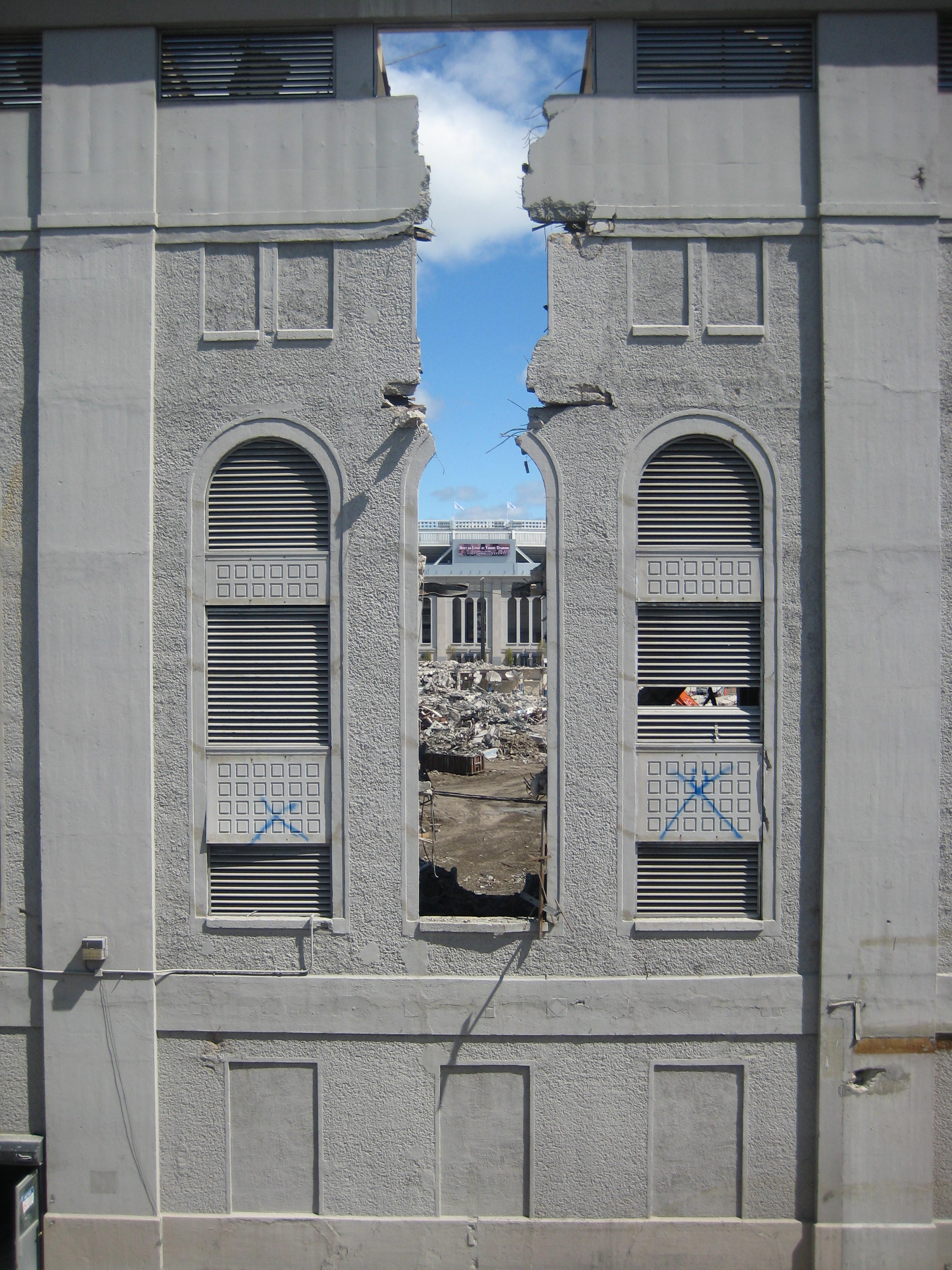
I know this is getting close to maudlin or even macabre – and I’m going to try to fulfill this latest promise to stop after this – but my friend Rick Cerrone, long-time Media Relations Director of the Yankees, emailed these to me today to commemorate the 87th and final birthday of The House That Ruth Built. They are beautiful in there own way – and striking.


And Here Come The Photos (Now With Video Link)
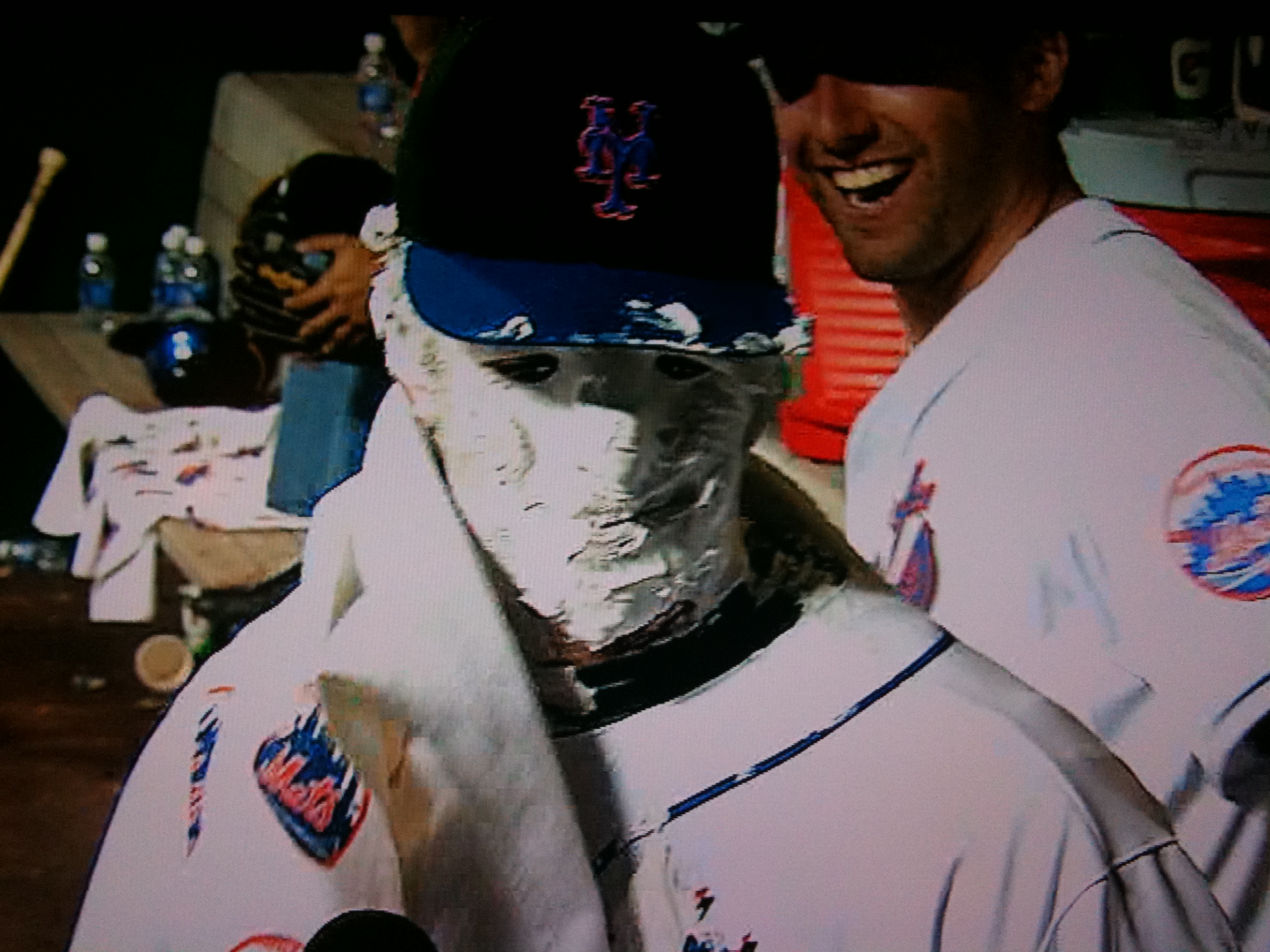
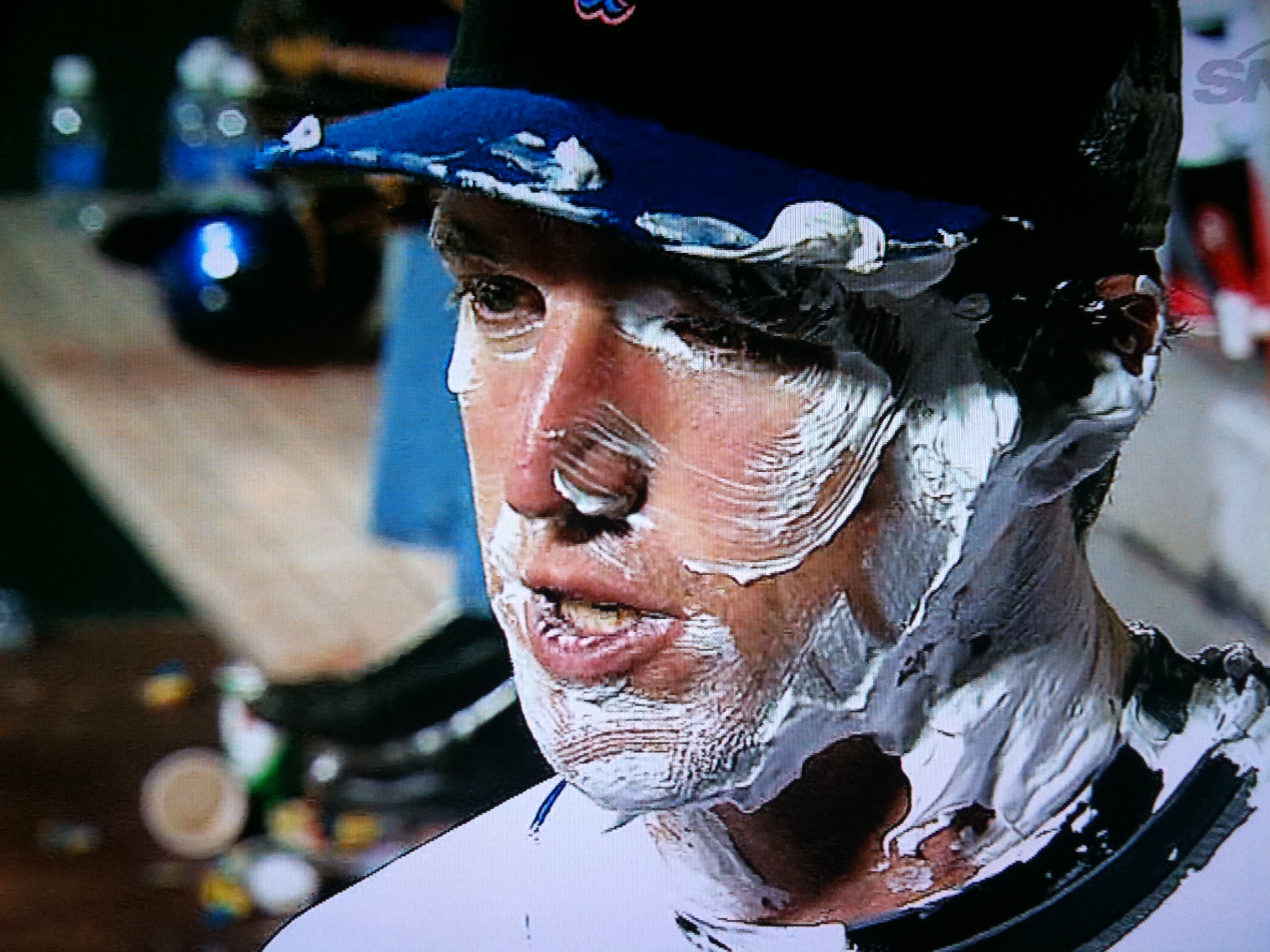
Ike Davis, savaged by Jeff Francoeur during Kevin Burkhardt’s interview (shaving cream hits about 0:45 in SNY.TV post-game report) on SNY after his 2-for-4, 1 RBI debut tonight:


The Ike And Ron Davis Review
On Saturday, July 29, 1978, with Bob Lemon having gotten six unexpectedly good innings out of Ken Clay and the Yankees leading the Twins 7-1 at Yankee Stadium, Lemon thought it was a good time to break the new kid in.
He had been obtained from the Cubs a month before in the repatriation of Ken Holtzman to Wrigley Field, and had dazzled in AA at West Haven. He was greeted by Minnesota catcher Butch Wynegar, who walked. Hosken Powell followed with a single. Roy Smalley then walked. I was there, but my scorecard is stored somewhere, so I don’t know if he actually threw any strikes before Lemon came and got him, and – in a move that would presage 1979, 1980, and 1981 – Rich Gossage was summoned to clean up the mess.
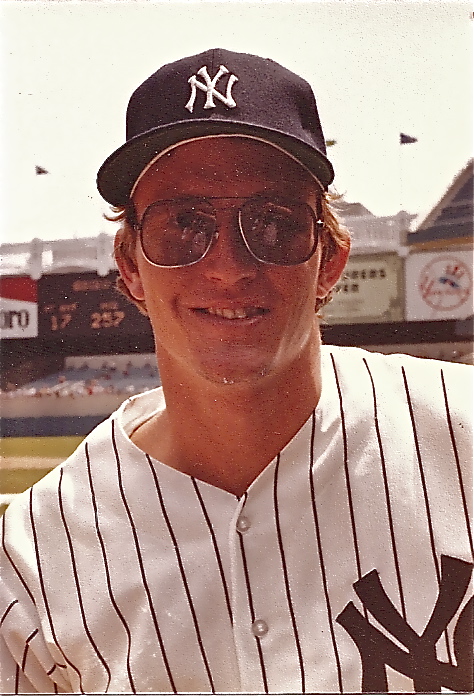
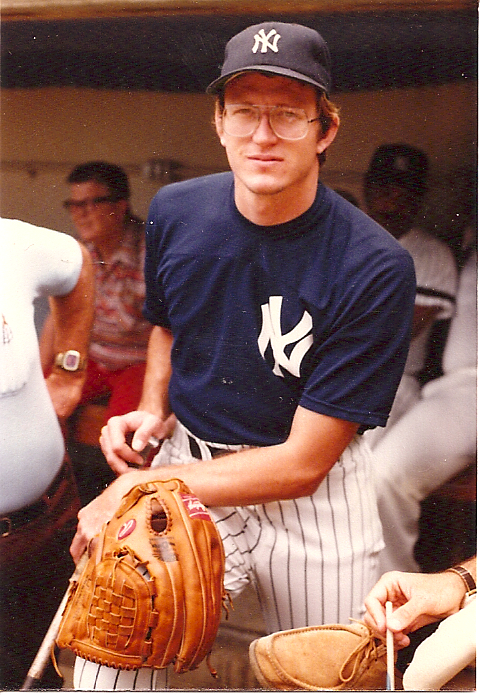
The next day, in my capacity as part-time free-lance semi-pro not-real-good photographer, I posed the kid on the field in the Bronx. “I guess you better get the picture before they get rid of me,” he said with a laugh that didn’t disguise his discouragement. I told him that he was 22 and I was 19 and even if neither of us was still in the majors the next day, he’d be back – and I’d never get there. That cheered him up.
I think they did send him back the next day, or soon thereafter. His next appearance in the majors was in September. The next year, amid an otherwise horrible season in New York, he’d go 14-2 (all in relief) with nine saves, and he’d stay in the majors through 1988.
His name was Ron Davis, and hours from when I write this his son Ike will debut, also in New York, also (almost) directly from AA. Wish I could be there.
THE METS AND NO-HITTERS:
Got asked a great question on twitter about any kind of theory that could even partially explain why, after Ubaldo Jimenez’s gem, the Mets could remain one of the franchises that has no no-hitters to its credit. Suddenly the light bulb turned on.
Years ago, one of the Stats Inc guys did a wonderful analysis of the amount of fair and foul territory in current and historical parks – I’ll have to find the book. But the gist was, the amount of fair territory in which hits could drop in the Mets’ first home (The Polo Grounds) was enormous (centerfield was nearly 500 feet away from the plate). In Shea it was still pretty damn big, and in Citifield, it is, especially when measured against other new parks, proportionately just as bad as at Shea.
That might be one explanation. Interestingly, if my list is complete, there were only five no-hitters ever thrown at the “last” Polo Grounds (Rube Marquard, Earl Caldwell, Jess Barnes, Carl Hubbell, and Rex Barney) over 69 seasons (57 by the Giants, 2 by the Mets, 10 by the Yankees) and only two (Jim Bunning, Bob Moose) in the 45 at Shea.
UPDATE, 5:30 EDT: Just to clarify, obviously this would only explain half of the Mets’ no-hit drought. One might wonder if years of pitching inside a big-fair-territory-area might influence how the same pitchers would throw in road parks, but lord knows there isn’t any stat to measure that.
Ike, No Ikettes; C.J.; More Yankee Stadium Demolition
Good call here by me about the Mets not calling up Ike Davis soon.


Jackie Robinson Night – Finale
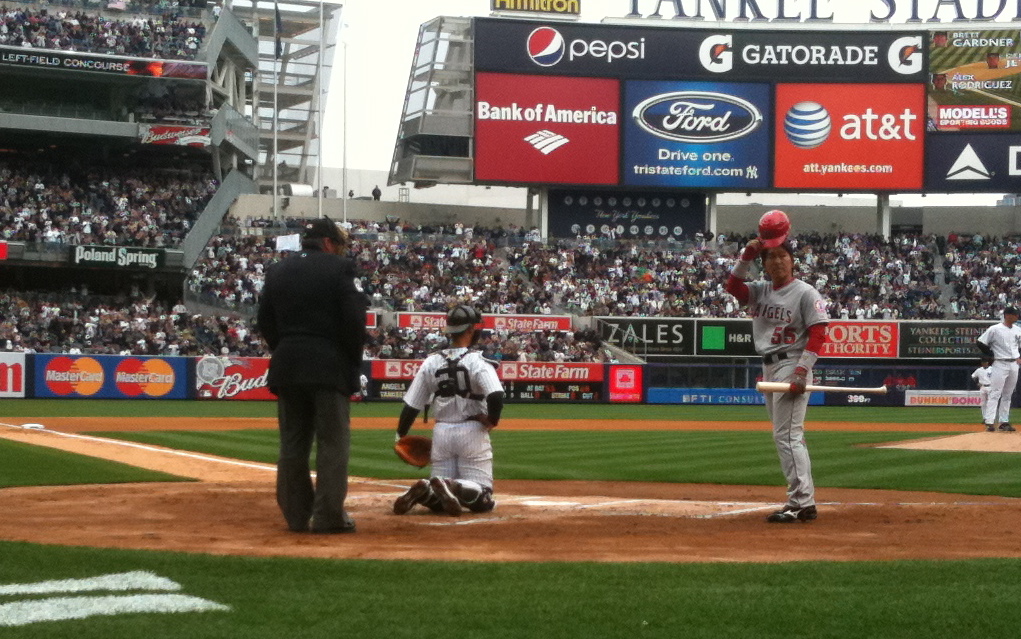
The superb symmetry did not end with two homers by Robinson Cano – named, of course, for Jackie Robinson. The Yankees were forced to get the last out in a 6-2 win over the Angels from the last man grandfathered in to wear Robinson’s uniform number 42, Mariano Rivera.



Jackie Robinson Night
FROM YANKEE STADIUM – Robinson Cano, named for Jackie Robinson, homers twice. Jackies widow, Rachel, appears at the ceremonies here tonight, and continues to defy age. She is elegant, beautiful, and moves with grace and confidence. She is 87 years old -you would be hard-pressed to believe she is even 60. The night, with everybody up to and including the umpires wearing Number 42, is perfect (or would be if it hadnt dropped 15 degrees in the fourth inning!).
Sad But True
Presented with no implication of racism, nor with any other comment.
Hayhurst And Miller
Bulletin news from the esteemed author and DL’d pitcher of the Toronto Blue Jays, Dirk Hayhurst. The Bullpen Gospels is no longer a cult classic. It is not only going to stay on the best-sellers’ list of The New York Times, it is going to move up on it. It is now considered the 15th best selling non-fiction paperback in the country.
See?
MARVIN MILLER AND THE HALL OF FAME
The venerable organizer of the first successful players’ association in sports turned 93 today and if there was justice, he would be starting to prepare his speech for the Hall of Fame induction ceremonies over the summer.
As Joe Morgan so aptly noted on ESPN’s Sunday Night Baseball, it is not just the players who should thank Miller for increasing rookie salaries from $8,000 to $400,000, and the top end of the equation from $100,000 to Eleventy Billion. The owners, despite doing everything possible to stop Miller before he started, then stop him while he was dismantling their plantations, then roll back his accomplishments, saw similar income explosions, and the growth of franchise values from a high then of around $12 million, to the fact that a couple of clubs are now worth a $1.6 billion.
That’s what the owners were fighting.
It is literally true that when Miller came to the MLBPA in 1966, the most expensive seat in any big league stadium was $3.50 or $4. The seat that now goes for a couple of grand in a luxury box, or for $1250 in the front row in the Bronx, was $4 – or less – before Marvin Miller almost single-handedly changed the nature of the business of the equation, and thus of the sport.
It can be rightly argued that fans don’t get to see players playing as long for one team as they used to (although I suspect a thorough study would indicate the change is a lot less than people think). They also don’t see many players spend their careers on the outside looking in, enslaved to one club literally forever, and never even getting to the post-season (Ernie Banks). The free agency that Miller rightfully won has not contributed to the small market/big market dilemma, it has only redefined it, and more importantly it has provided for the first time in the history of the game, the opportunity for less robust clubs to climb out of their holes through shrewd spending of the dollar (Cleveland in the ’90s, Tampa Bay today).
I don’t know what parallel there is to Marvin Miller among the players. I guess you’d have to start with Babe Ruth and double his longevity. Miller’s influence has been that strong. Was it painless? No. Was Ruth’s? The new game he created turned bunting, running, sacrificing, and hitting-and-running – and the men who excelled in them – into afterthoughts. It killed off John McGraw and “Inside Baseball” and for all we know led to the New York Giants moving out and the Dodgers going to LA, too.
But ask the players of today, and the fans of today, and the owners of today, if they’d really like to go back to, say, the ’60s, before free agency. It cost less to get in. And each team and each player lived on the margins of financial collapse. Is it just a coincidence that the geographical chaos of the time ended four years before free agency began? Between 1953 and 1972, Boston became Milwaukee, St. Louis became Baltimore, Philadelphia became Kansas City, Brooklyn became Los Angeles, New York became San Francisco, Washington became Minnesota, Milwaukee became Atlanta, Kansas City became Oakland, Seattle became Milwaukee, and Washington became Texas. Cleveland nearly moved. Oakland. San Francisco. Cincinnati. The Cardinals were going to Dallas.
In the 38 years since, for all the other turmoil, one franchise has moved.
Marvin Miller is a Hall of Famer, and with the special elections afforded Lou Gehrig and Roberto Clemente as precedent, he should be sent to Cooperstown now, not later – now while he can still enjoy it, and now while we can still honor him.
Opening Day In Pictures
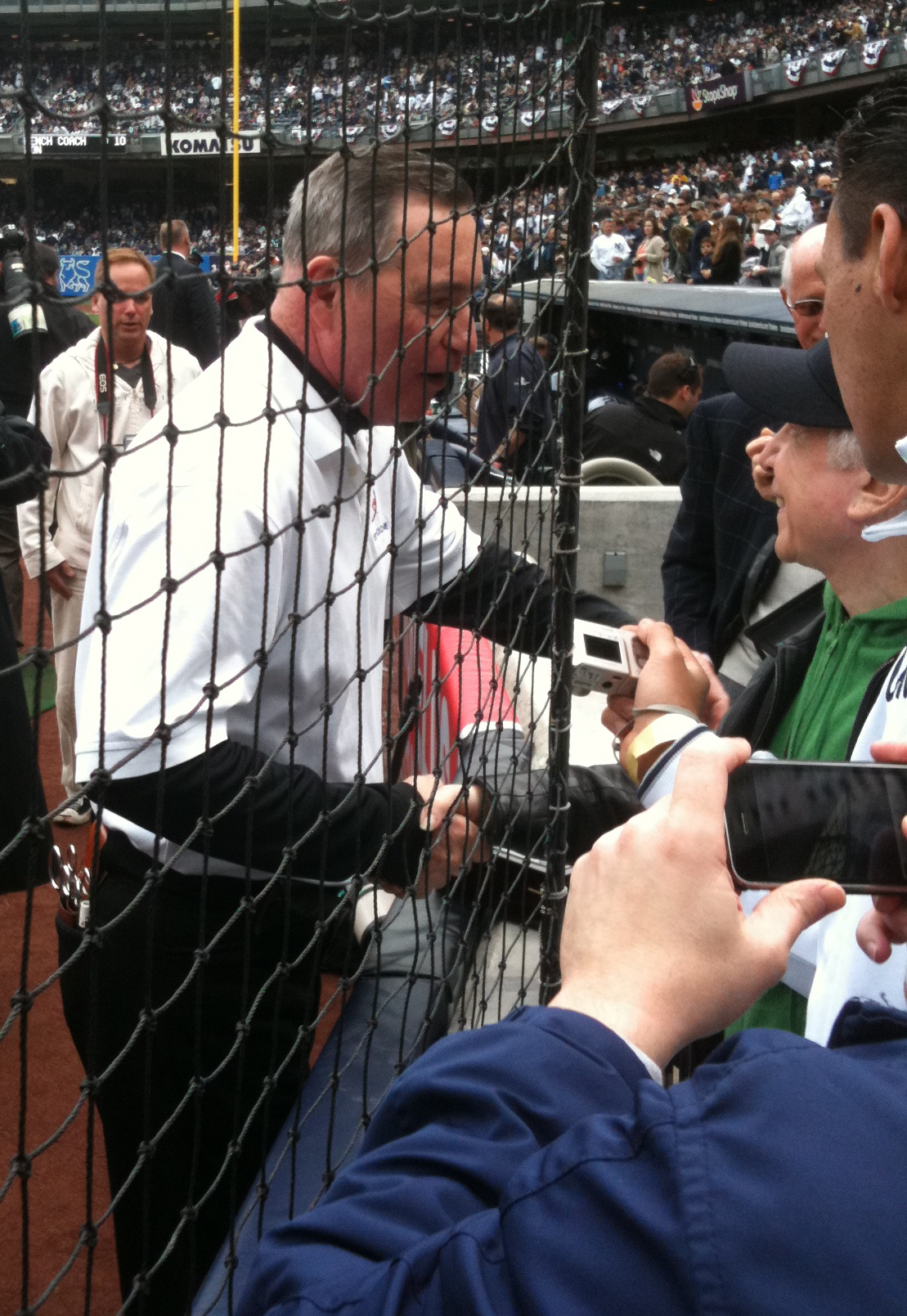
Flyovers, Steinbrenners, Bernie Williams ceremonial first pitches, Matsui’s Return – very nice events.




 Baseball Nerd