Category: Dailies

Recommended Prospects, Recommended Reading (Updated)

Funny that with all the big names moving before the deadline, the number of primo prospects was actually pretty low. I was particularly unimpressed with what the Indians got for Cliff Lee (and Ben Francisco) although I am only about ten percent insufficiently skeptical to address the Lee deal as I did the McLouth one – that the trading team was selling a guy, if not at peak value, then at the last moment he would be seriously overvalued, and were doing well to get anything hopeful back.

Having said that, if you still consider Justin Masterson a prospect and not a full-fledged major leaguer, he was clearly the most gifted of all the players given up for “the names.” A year from now, when Brad Penny and John Smoltz and who knows who else are Red Sox memories, Boston would not have parted with him, and not just because of his pitching gifts. The Sox are astounded by his quiet leadership, an almost unheard-of quality for a pitcher. He doesn’t rant, he doesn’t yell, he doesn’t slap his glove against his thigh, and nothing bleeds from his sock. He just inspires his teammates to feel more secure about their talents and accomplishments, and their prospects for winning the game. Terry Francona will miss him, maybe not today, maybe not tomorrow, but soon, and for the rest of his life.
And ironically, given how they are howling in Pittsburgh over the exiling of McLouth, then Jack Wilson, then Freddie Sanchez, the head-and-shoulders pick for the top pure-prospect traded against the deadline was the guy the Bucs got for Sanchez, pitcher Tim Alderson. Harkening back to the Johan Santana/Yankees post here, the rule of thumb is that half of all pitching prospects fail. That would ordinarily discourage the ever-discouraged Pirate faithful. However, Alderson and Charlie Morton are both front-of-rotation, ace-of-staff prospects. If one makes it and the other turns merely into a righty Jarrod Washburn, they’ve done awfully well – and this assumes that very little else from the McLouth or Wilson trades bears great fruit, which is not necessarily a correct assumption.
One more deadline note. The amazement at the Adam LaRoche/Casey Kotchman trade itself amazes me. The Red Sox made a similar acquisition in 2004, a glove-first, low-power starting first baseman, about whom everyone said “where they gonna play him?” His name was Doug Mientkiewicz and the point was, his window as a starting player was pretty much over, as is Kotchman’s. He will never hit enough. So you keep the defensive whiz as your back-up and pay for it by spending the middling slugger with the middling glove. The only complication this time is that the Boston backup on those days when Victor Martinez is playing first, is a fellow named Youkilis, and he’s no slouch.
BRIEF UPDATE NOT WORTHY OF ITS OWN POST

The Rangers sent Frank Francisco out on rehab to AAA. To Frisco of the Texas League. Making him Frank Francisco of Frisco.
Nearly as good as Johnny Podres of the Padres, Jim York of New York, or Ted Cox of the Red Sox.
READ – IN FACT, YOU’RE DOING IT NOW!

Three books to endorse with high praise and the caveat that I’m mentioned in one, and two of them are written by friends. I write as a guy who was once the country’s only nationally-published reviewer of baseball books (who once gave the second edition of The Baseball Encyclopedia a panning for some awful typos) so finding three I like at one time is quite a feat.
First there’s Marty Appel’s Munson: The Life And Death Of A Yankee Captain. When a book reveals details of a man’s life to his own family, it’s a pretty good book. I am duly impressed both with the research effort and the clarity of Marty’s work, and the attempt to recreate that sad day 30 years ago tomorrow when Munson’s death shocked baseball. It is not happy reading, but it is worthwhile reading.
I think Ron Darling may have written (let’s broaden it out to all of them who didn’t go to Yale; even co-written) the best book by a pitcher since Kirby Higbe’s HIgh And Inside. Ron’s is called The Complete Game and it takes a novel approach: a pitch-by-pitch, thought-by-thought recitation of key innings of key games, nearly all of them his own, throughout his long span in college and major league ball. Apart from taking you inside an entire team’s thinking as the pitches succeed each other, Ronnie also underscores what is to me the most underrated skill among elite athletes: Memory. Nearly all of the microscopic detail (what he was thinking between the third and fourth pitches, to the third hitter, in the fifth inning, of his thirteenth start, etc) was pulled from his recall and simply verified in the record books. He rolls the details out the way Gordie Howe once rolled out each shot he took in a Detroit Red Wings-New York Rangers game, 27 years after he played it. A great read, and very well written.
Almost not at all written is the third suggestion: Chris Epting’s The Early Polo Grounds. This is 181 pre-1925 photos taken at the legendary home of The New York Giants and it borders on time travel, even if the captions aren’t always complete (a date of an October, 1910, photo is disputed by the author because the Giants didn’t play in that year’s World Series; he seems not to have known that in those days the Giants and Yankees regularly played post-season series for the “Championship of New York”). Having just spent hours in the photo vaults of Cooperstown looking at all the photos of the fabled ballpark, I can say that this collection rivals that part of the Hall’s from the 20th Century – plus, they won’t arrest you if you try to take it home.


Ortiz Versus Manny

This just sums up two guys:

The New York Times outs David Ortiz and Manny Ramirez as two of the players on the 2003 Steroids survey.
Ortiz – with some help in the phrasing, but this is doubtlessly him – issues a statement of confession: 

One, I have already contacted the Players Association to confirm if this report is true. I have just been told that the report is true. Based on the way I have lived my life, I am surprised to learn I tested positive. Two, I will find out what I tested positive for. And, three, based on whatever I learn, I will share this information with my club and the public. You know me — I will not hide and I will not make excuses.”

Meanwhile MLB.Com quotes Ramirez, before the Dodgers-Cards in St. Louis: 

“If you guys want to talk about the game and what happens now, I can sit and talk for two hours. But something happened six years ago, I don’t want to talk about that. If you want more information, you have the number for the union. Call them.”


Can we talk about what has now happened twice in six years? Can we talk about what happened this spring? Can we talk about how Dodger fans can look at themselves and the standings in the mirror?

Get lost, Manny.

Now you know why you will never see Manny Ramirez in Cooperstown. Unless he’s there with Clemens, signing in front of the CVS.

The Rocket Gets To Cooperstown

This town isn’t often surprised by celebrities. It has, after all, hosted every Hall of Famer not posthumously elected, and until a few years ago it used to be visited by two major league teams a year in an annual exhibition game.
That was until Roger Clemens showed up in front of the CVS.
Just as the post-induction crowds were thinning out, Clemens suddenly showed up here, walking down Main Street unescorted at dusk, signing autographs for most of a clot of 100 or so people that came out of the shops and restaurants as the buzz spread that it really was him. He didn’t stop to chat, and he wasn’t sightseeing. The explanation was simple, and provided by other Dads in from out of town, with their twelve-year olds in tow. Clemens was merely escorting, and watching as, his youngest son Kody competed in a Cooperstown Dreams game – the little league-ish competition that has re-loaded the kid supply around here.
So, if like me, you thought you’d never see Clemens in Cooperstown, you’d be wrong – I just saw him. Thus, after three days of Pete Rose and now The Jettisoned Rocket: Cooperstown, Village of The Damned?
MARK BUEHRLE IN COOPERSTOWN?

The caretakers of history here were already promised Dewayne Wise’s glove and several other artifacts from Mark Buehrle’s perfect game. Lord knows what they’ll want now that Buehrle has taken a prospective second consecutive perfecto longer than anybody else, and retired a record 45 in a row. Did he wear anything in both games with which he could part? Would you give up your glove, your cap, your spikes?
I watched Yu Darvish’s spikes from The World Baseball Classic get unpacked in the processing room here today, and got to play in the secret vaults some more between another day of research.
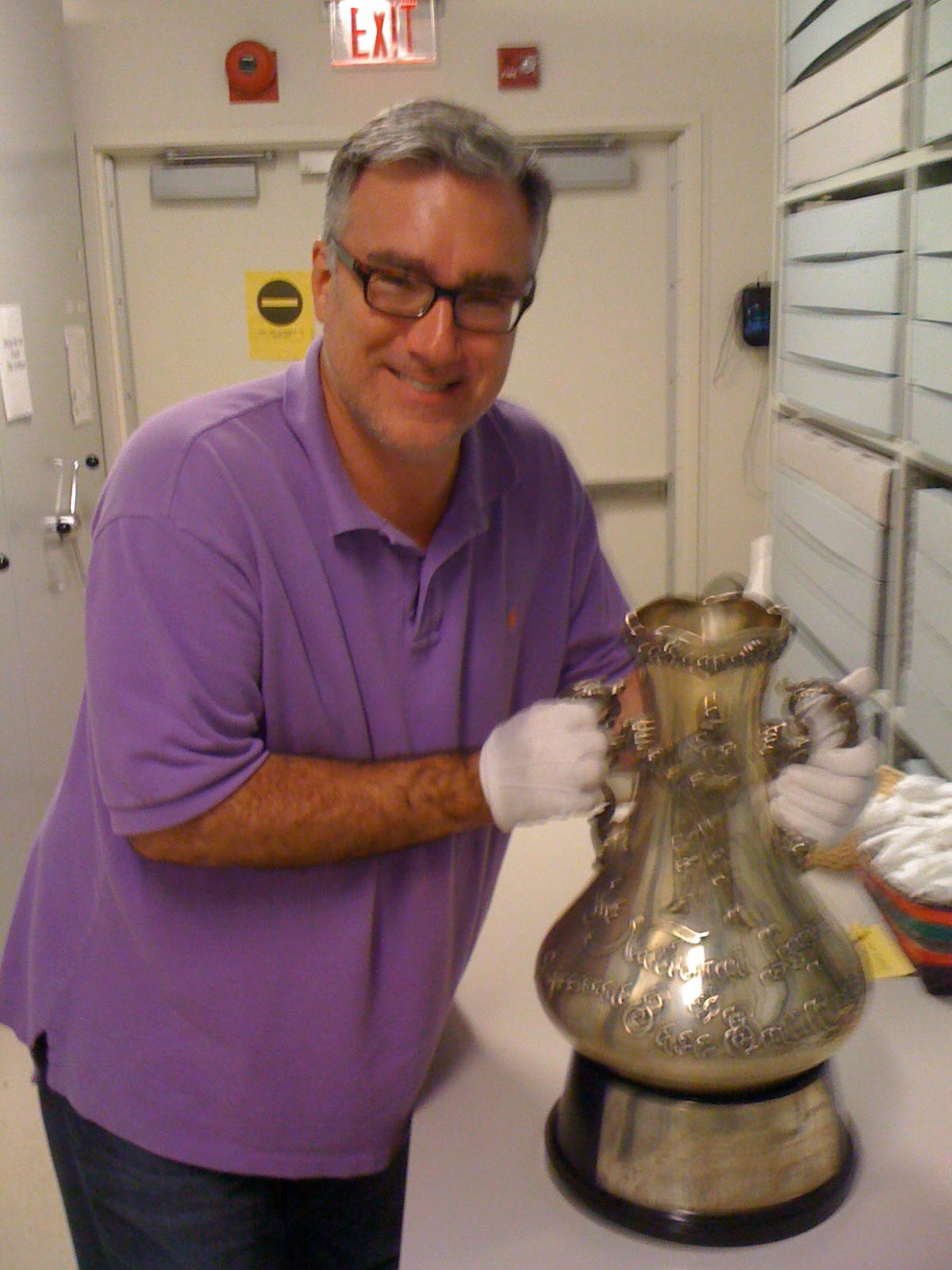
You ever heard of The Temple Cup?
IMG_0952.jpg

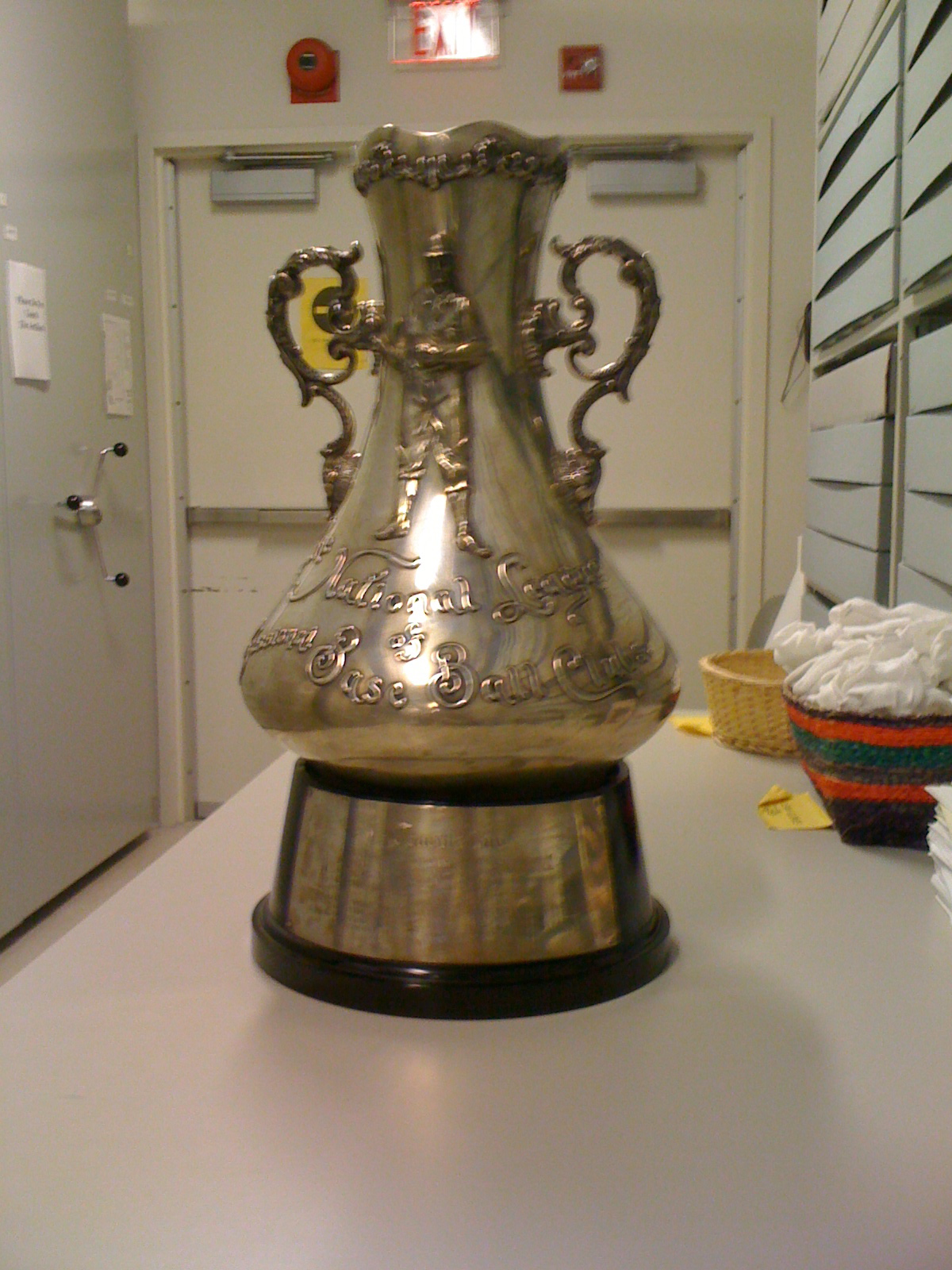
OK, here is the real star of the show, a little more clearly:
IMG_0950.jpg
If the teams had taken it more seriously, today, this surprisingly light trophy might be “Baseball’s Holy Grail.” It was competed for by the teams finishing first and second in the National League after the 1894, 1895, 1896, and 1897 seasons, in a bid to re-create some of the post-season excitement created by the early World Series before the wars of 1890 and 1891 and the subsequent absorption of the American Association by the N.L. In three of the four years, the runners-up won, but the regular season champs claimed the title anyway. There were two sweeps of the best-of-sevens, and the other two ended 4-to-1, and after the ’97 Temple Cup, they called Pirates’ owner William Temple and gave him his Cup back.
For now it rests in cold storage at the Hall, though will soon be back on display in the 19th Century section. I’m sorry it didn’t get taken seriously; it is a cross between the Stanley Cup and the fictional cup presented to Charles Foster Kane by his newspaper staff in “Citizen Kane,” later found after Kane’s death in an endless storage area. “Welcome home Mr. Kane, From 467 Employees of the New York Inquirer.”
ROSE POST-SCRIPT:

Bud Selig has now made his point clear: he’s not budging on Pete Rose.
That wasn’t the point of my reporting on it, nor Bill Madden’s, nor anybody else’s.
The point is, there is now pressure, from at least three key Hall of Famers whom Selig respects, on Bud to reverse course. Repeating from last night: Joe Morgan, Hank Aaron, and Frank Robinson could be the only three Hall of Famers who would actual vote to admit Rose. The issue is whether or not Rose is made eligible for election by the Veterans’ Committee. And the reporting of this new pressure is not advocacy, it is informational.
And it’s true.


The Pete And The President And The Hall of Famer Shortage

It wasn’t the first time, and it doesn’t mean they said anything more than ‘howdy,’ but Pete Rose met with MLB President and Chief Operating Officer Bob DuPuy here in Cooperstown over the weekend.

Perhaps just importantly, when Rose said his former teammate (and Hall of Fame Vice Chairman) Joe Morgan was “here,” he was slightly underselling reality. Morgan’s visit to Rose, in the same venue as DuPuy’s, lasted closer to an hour.

While the rest of us were all distracted by the official big doings down Main Street, the action at the memorabilia shop where Rose hawked his autographs all weekend, must have felt heavy enough to merit a revolving door. Besides the emotional visit from (and fractional forgiveness by) Rose’s old manager Sparky Anderson, witnesses say DuPuy also stopped by the shop, and Morgan did not spend his hour there just reminiscing.
All of this continues to feed the extrapolation that MLB is seriously considering reinstating Rose – at least for eligibility for the Hall – and that Commissioner Bud Selig is being heavily lobbied by people he greatly respects, to pardon Rose, or give him clemency of some sort. As Bill Madden of The New York Daily News reported, Hank Aaron told a couple of reporters (ironically including one who works for the Hall of Fame) “I would like to see Pete in. He belongs there.”
Madden has since updated the story with a detail that really turns up the volume:

It was also learned by the Daily News that in a meeting of the Hall of Fame’s board of directors at the Otesaga later on Saturday, two of Rose’s former teammates on the board, vice chairman Joe Morgan and Frank Robinson, also expressed their hope that Selig would see fit to reinstate Rose.

At roughly the same hour, as I first reported late Saturday night, Sparky Anderson marched into the “Safe At Home” shop as if he were going to the mound at Riverfront to pull Jack Billingham, and, tears welling in his eyes, told Rose, “You made some mistakes 20 years ago, Pete, but that shouldn’t detract from your contributions to the game.”


There was a rather petulant piece at ESPN pooh-poohing the story, and another less dyspeptic one from the solid reporter Phil Rogers of The Chicago Tribune claiming Selig was angry enough about the Daily News report that he nearly issued a rare formal denial.

But the Commissioner did not do that, and the reasons are not hard to gather. Aaron is not only his close friend but someone whom Bud has always held on a pedestal. Morgan’s power within baseball, and particularly the Hall, has been steadily growing. Frank Robinson is perhaps the game’s elder statesman. Rogers’ conclusion that “there has been no movement by Rose’s peers to have him take a seat among the greats in Cooperstown” might be numerically correct, but it does not take into account the relative influence of these three larger-than-life figures.

Perhaps just as importantly is the upcoming trauma of the 20th anniversary of Rose’s banishment, and, a week later, the 20th anniversary of Commissioner Bart Giamatti’s stunning, and to so many of us, heartbreaking, death. Selig and baseball can completely co-opt the story and turn it into one of redemption (whether or not it really is). The Veterans’ Committee vote on Rose can finish with only Aaron, Morgan, and Robinson voting “aye” and everybody else shouting obscenities, and Selig will have still redirected the coverage at the end of next month. It’s the scene from “Catch-22” where the General, Orson Welles, wants to court-martial the Captain, Alan Arkin, for dropping his bombs in the Mediterranean. “We thought of that,” says the Major, played by Martin Balsam, “but then we considered the inevitable publicity.” Welles sighs. “You don’t have to say another word, Major.”

And lastly there is the drum beat growing louder and louder about the Hall of Fame and steroids – and Rose. It’s not just the issue of relative immorality. There is a looming Hall of Famer shortage. Exactly who are we to think are the lead-pipe, no-controversy, no-rumor, no-speculation first-ballot cinches among the recently-retired? Fred McGriff next winter? Larry Walker for the ceremonies of July, 2011? Bernie Williams of the class of 2012? Craig Biggio the year after that? There are, to me, literally two certainties out there and only one of them is certainly retired – Greg Maddux will be here five summers hence, and, if he doesn’t try to pitch again, so will Tom Glavine.

And in the interim? Robby Alomar? 

I mean – and I intend to go into this in depth in a future blog – I think this is great news for Andre Dawson, Dale Murphy, and maybe even Roger Maris, Gil Hodges, and Ron Santo. But the next few years are not going to be remembered for serene and joyous election revelations and inductions. It ain’t gonna be Jim-Ed fans buying out the postcards of their Red Sox hero by late on the day of the ceremony, as they just did this weekend.

Good grief, the Hall might – gasp – need Pete Rose for his star power.

MEANWHILE, IN THE BASEMENT:

I am spending two extra days here researching the obscure stuff I can’t find out about anywhere other than the Hall’s incredible library. The entire staff (particularly librarian Jim Gates and Collections Senior Director Erik Strohl) has already passed several camels through the eyes of needles and before you say they’re just sucking up to a guy with a tv show, their long-ago predecessors Cliff Kachline and the late Jack Redding treated me with the exact same level of respect the last time I darkened the library’s doors – when I was fourteen years old.

Anyway, the research later. For now, here is one of the things we stumbled over, buried in a box in the Scorebooks and Scorecards Collections, while – of course – looking for something else:

IMG_0925.jpg

This is a nondescript, hand-drawn scorebook – in an otherwise ordinary composition notebook – with no markings or identification. Maybe the same name will jump out at you, that jumped out at me.

Batting second and playing centerfield for Shelbyville, Kentucky, of the Blue Grass States League, is Stengel. Charles Dillon “Casey” Stengel. It’s July, 1910, and he’s just been saved from having to go back to dental school in Kansas City after his first professional season as a player came to an abrupt halt when the Kankakee team went out of business! Stengel latched on with Shelbyville (the franchise moved in mid-season so some records show him with Maysville), opened up with a 1-for-3 day in a 3-2 win, and would remain in baseball until his death in 1975.

And this is a scorebook, apparently belonging to a fan, who saw him play 20 or so times, in the lowest of the minors, 99 years ago. And the Hall of Fame has so much stuff that this not only isn’t on display, but nobody had yet had the time to look long enough at the book to figure out that that’s what it was.

And finally I have some ideas of what I want my house to look like!

Since you’ve read so long, just to say thanks, I give you something you never see – what the non-baseball part of Cooperstown looks like – here’s Lake Otsego, which is about a four-minute walk from the Hall’s front door:

IMG_0937.jpg


Ball Rolling Toward Rose Eligibility

And the clues continue to mount.

The teary-eyed communion between Sparky Anderson and Pete Rose at a baseball memorabilia shop here in Cooperstown on Saturday wasn’t the only hint over induction weekend that the ice may be breaking around Rose’s 20 years in suspended animation – and eligibility for, if not necessarily election to, the Hall, might be in the offing.
The impeccable Bill Madden reports in today’s New York Daily News that Hank Aaron held a “seemingly impromptu” gaggle with a handful of reporters on Saturday during which he not only endorsed an asterisk for steroid users who reach Cooperstown, but brought Rose up himself and said “I would like to see Pete in. He belongs there.”
On Saturday night I reported that Rose’s old Cincinnati manager stunned onlookers in the card shop in which Rose spends most of induction weekend, by bounding through its doors to have a brief conversation with him. Saying he had been convinced of the rightness of the timing by his wife, Anderson told Rose: “You made some mistakes 20 years ago, Pete, but that shouldn’t detract from your contributions to the game.”

I had the briefest of conversations with Rose yesterday. He confirmed the Anderson visit, said it had been “a long time” since they had last talked (although he wasn’t certain it was the full two decades). Pete Rose is never tight-lipped about his prospects for reinstatement, but he was clearly being circumspect. “Sparky was here. Morgan was here. Perez was here. Schmidt was here.” He smiled, then answered my question about the ultimate outcome of his saga. “I think it’ll be all right.”

With the advent of increased Hall of Famer influence on the Hall of Fame itself, Joe Morgan in particular has grown powerful within the Cooperstown infrastructure. A Morgan greeting to Rose wouldn’t mean much. A Morgan word to Bud Selig about ‘time served’ might be – and Madden reports at least one other Hall of Famer is arguing such a line.

I was a steadfast opponent of Rose’s reinstatement for all of his first fifteen years of banishment. My belief was, even if he bet only on the Reds to win, this constituted a kind of passive/aggressive form of game-fixing: his use of players, especially his best relief pitchers, might be much more aggressive in games on which he had a wager, than those he did not. But the light bulb has slowly flickered on above Pete’s head, he has lowered the volume on his woe-is-me-ism, and most importantly, his crimes have been contextualized by the PED-era. There is no form of game-fixing more subtle nor more insidious than juicing. Not even gambling.

The 20th Anniversary of his banishment is a month away: August 24th. It has served its purpose. Rose will never get a significant job in the game; if necessary he can be statutorily prevented from getting one. Who knows? A reinstated Rose might even be a terrific in-person warning to minor league players and young big leaguers he might serve as a hitting coach, about the consequences of breaking the key rules – the ones about gambling, and the ones about performance-enhancers.

It’s time.

Cooperstown: Sunday – And More On Rose

The Hall of Fame induction speeches are always heartfelt and always noteworthy, but rarely do they have such emotional impact as this year’s.
Frankly, Rickey Henderson gave as good a speech as anybody could’ve imagined. It was respectful, it was self-deprecating, it was eloquent, it was moving. The only self-references were to say “I thank” – and he seemingly thanked everybody. And between his childhood memories of being bribed to play the game with donuts and quarters, to adolescent stories of asking Reggie Jackson for an autograph but getting only a pen, Henderson’s good-heartedness and generosity did more to enhance his reputation than anything else he could have done in fifteen minutes. I also think that Rickey finally admitted he had retired – the first-ever combination HOF acceptance/retirement speech.
Jim Rice was equally genuine and sincere, and instead of making even the slightest reference to the indefensible delay in his election, he poured oil on the troubled waters by saying it made no difference to him. My friend Tony Kubek did what he had always done so well: give us insights about others in the game. He began with a reference to his first Yankee roommate, and the man seated beside me, that roommate, Moose Skowron, tried to hide. Tony later inspired the longest sustained applause of the afternoon by thanking Henry Aaron for being such a hero and role model, inside and outside the game.
But the day was headlined by the daughter of the great Yankee and Indian second baseman Joe Gordon. Noting that her father, who had died in 1978, had ordered that there be no funeral nor ceremony, Judy Gordon said that her family would now consider Cooperstown his final resting place. If there was a fan who did not tear up, or feel a lump in the throat, he or she was not evident from where I was sitting.
Coming up tomorrow, a little more on the Pete Rose/Sparky Anderson ice-breaking I reported here Saturday night – the story is not only correct, but it’s only the beginning of what Rose considered a very rewarding weekend. First, some ground-level photos from Cooperstown 2009.
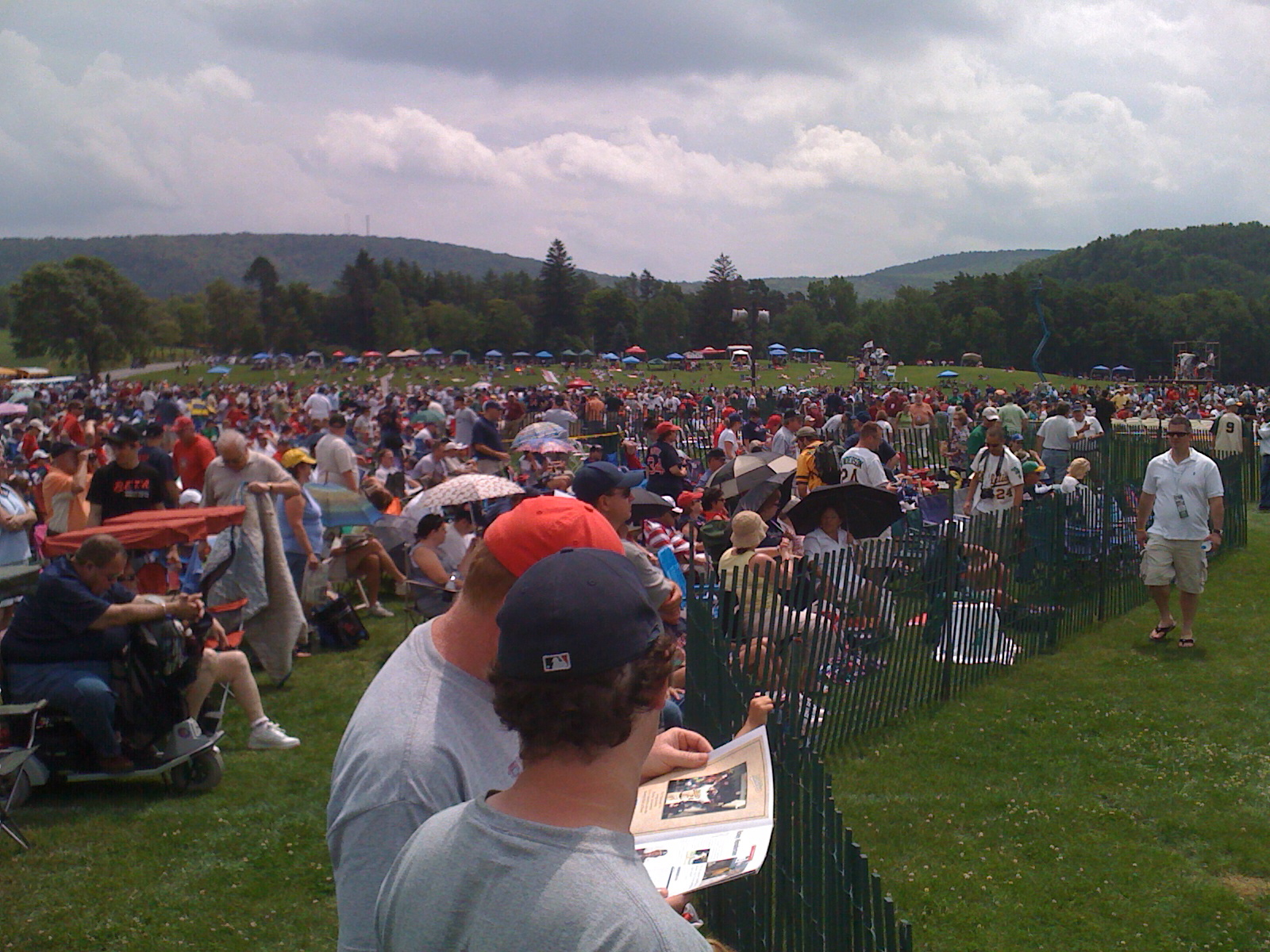
The mass of humanity assembles. It’s still more than an hour until the ceremony and thousands are already present:
IMG_0882.jpg
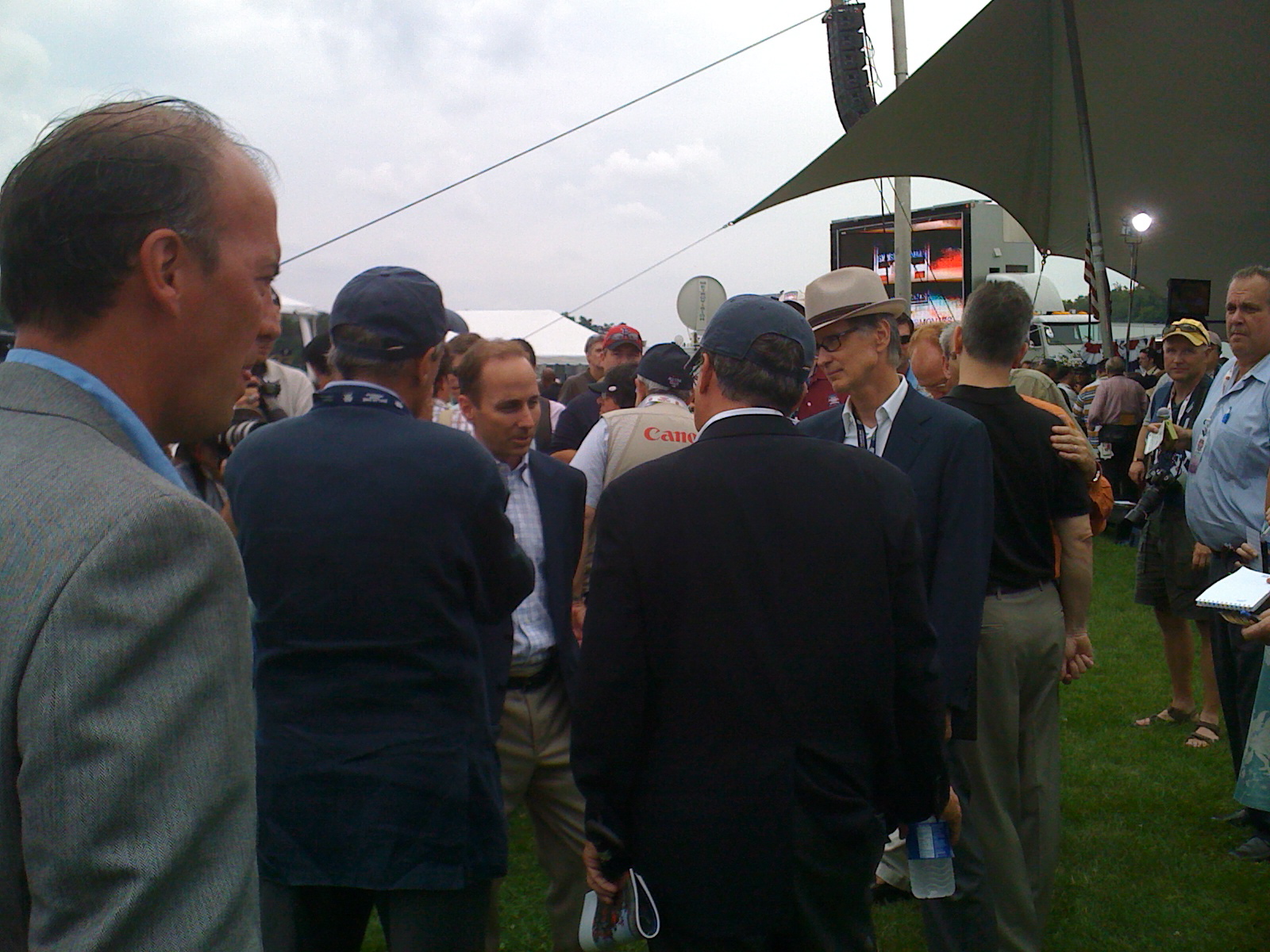
A little Yankee-Red Sox interplay. Brian Cashman at the left; Sox co-owner John Henry in the nifty hat, on the right:
IMG_0884.jpg
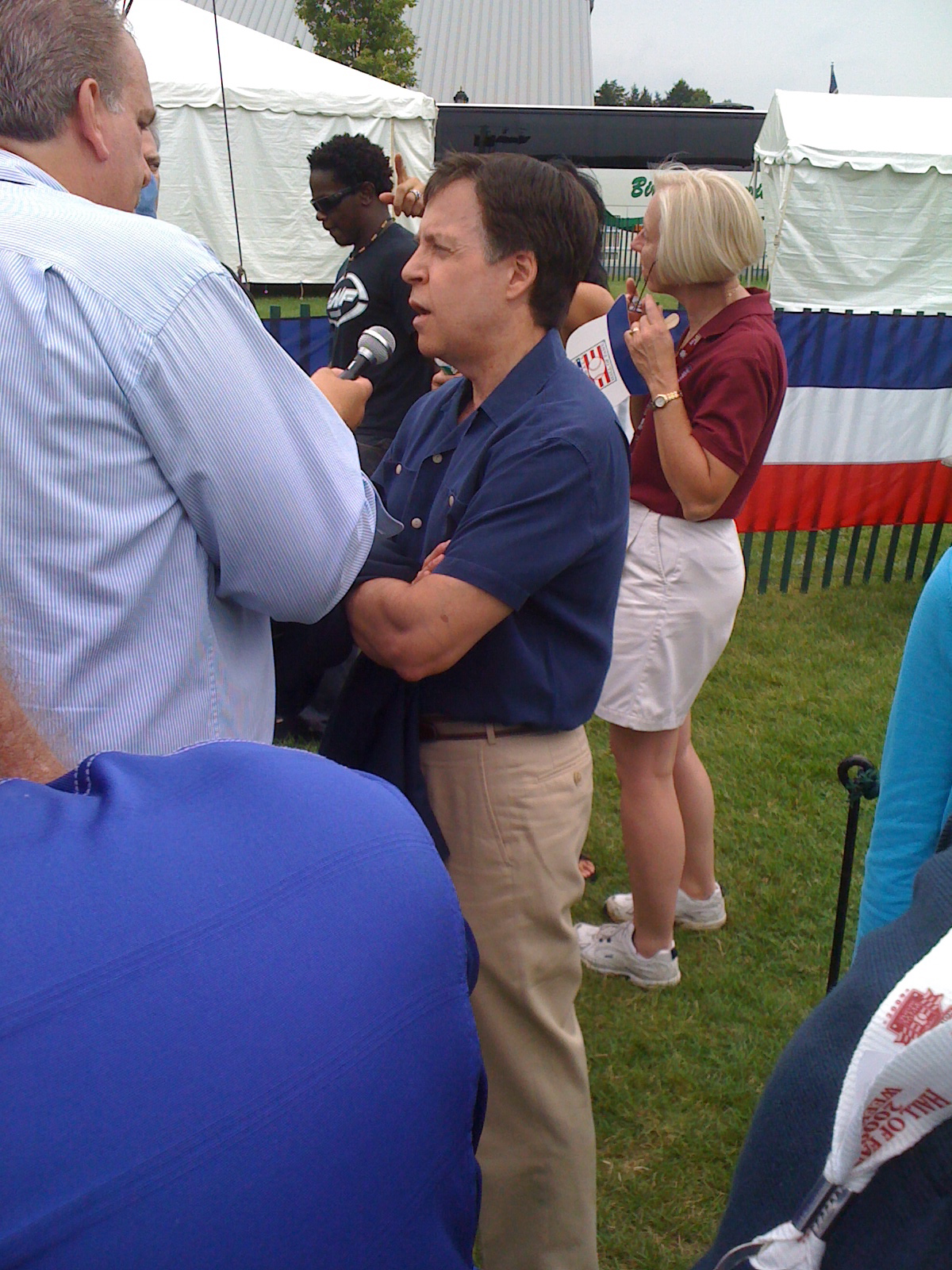
A colleague of mine – part of the contingent sharing the big day of his old partner Tony Kubek – interviewed, beforehand. Afterwards Bob and more than a dozen NBC Sports production figures of the ’70s and ’80s gathered for a lengthy reception in Tony’s honor:
IMG_0885.jpg
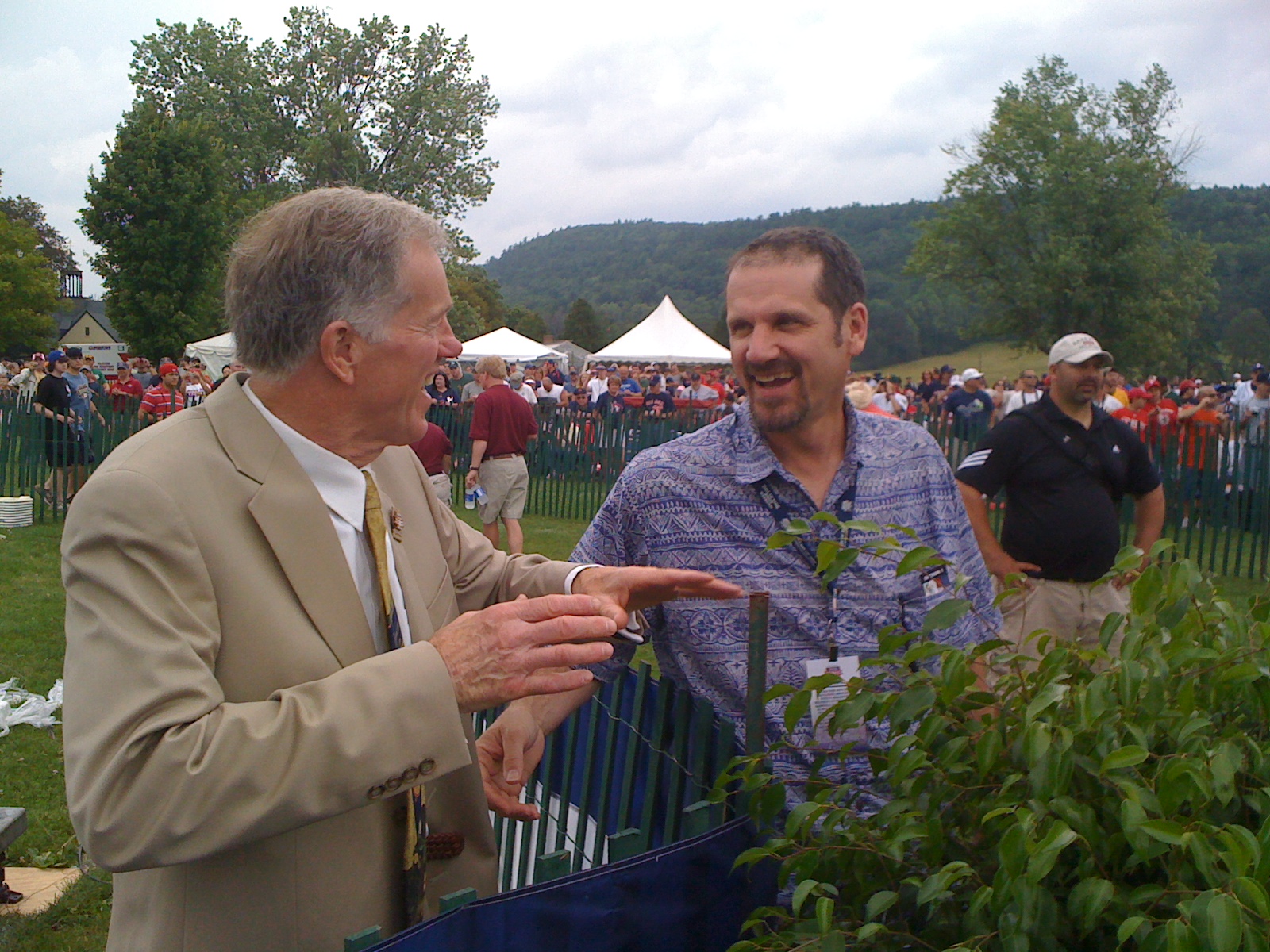
Mr. Kubek himself – getting a brief pre-ceremony pep talk from son Jim:
IMG_0887.JPG
And one more – that rare, almost transcendent appearance of Sandy Koufax, in the moments after the speeches ended. He is talking to Dave Stewart, once an Albuquerque Duke while Koufax was the team’s pitching coach. Eddie Murray at the right:
IMG_0894.jpg

Cooperstown: Sparky Anderson And Pete Rose Speak

In what both men indicated was their first conversation in roughly two decades, Sparky Anderson, manager of the Cincinnati “Big Red Machine” of the 1970’s, and Pete Rose, his most public and most star-crossed player, visited together briefly in Cooperstown on the eve of baseball’s Annual Hall of Fame Inductions.
Surprised customers lining up for another Rose autographing session in one of the village’s many memorabilia shops saw Anderson, his slow purposeful gait forever familiar to veteran fans, amble into the store to re-build something of the bridge Anderson felt Rose had burned during the events that led to his banishment for gambling by the late Commissioner Bart Giamatti in August, 1989.
“You made some mistakes 20 years ago, Pete,” on-lookers heard Anderson say. “But that shouldn’t detract from your contributions to the game.” As shopowners tried to hurriedly shoo the customers out, Anderson was seen to tear up as he explained his wife had been urging him to “go talk to Pete” and he finally felt this was the time. Rose also seemed moist-eyed as he quietly thanked his former manager.
Although time has blunted its impact, Anderson took one of the most principled stances in baseball’s long history when, after the 1994 strike, he said he would not manage a 1995 Detroit Tigers team made up of replacement players. He was initially granted a leave of absence, then returned after the owners lost their court bid to impose new work rules on the players and dismissed the replacements. But after the ’95 season, Anderson resigned, never to again manage in the big leagues. There seems little to indicate Anderson was forgiving Rose his transgressions against the game, but those who saw it said it was no challenge to discern that the moment of contact was deeply moving to both men.
The events unfolded even as baseball celebrated the official Hall of Fame dinner honoring Sunday’s inductees, and the subsequent “dessert reception” inside the Hall itself, complete with red-carpet introductions and a public address system straight out of a Hollywood premiere from the 1930’s.
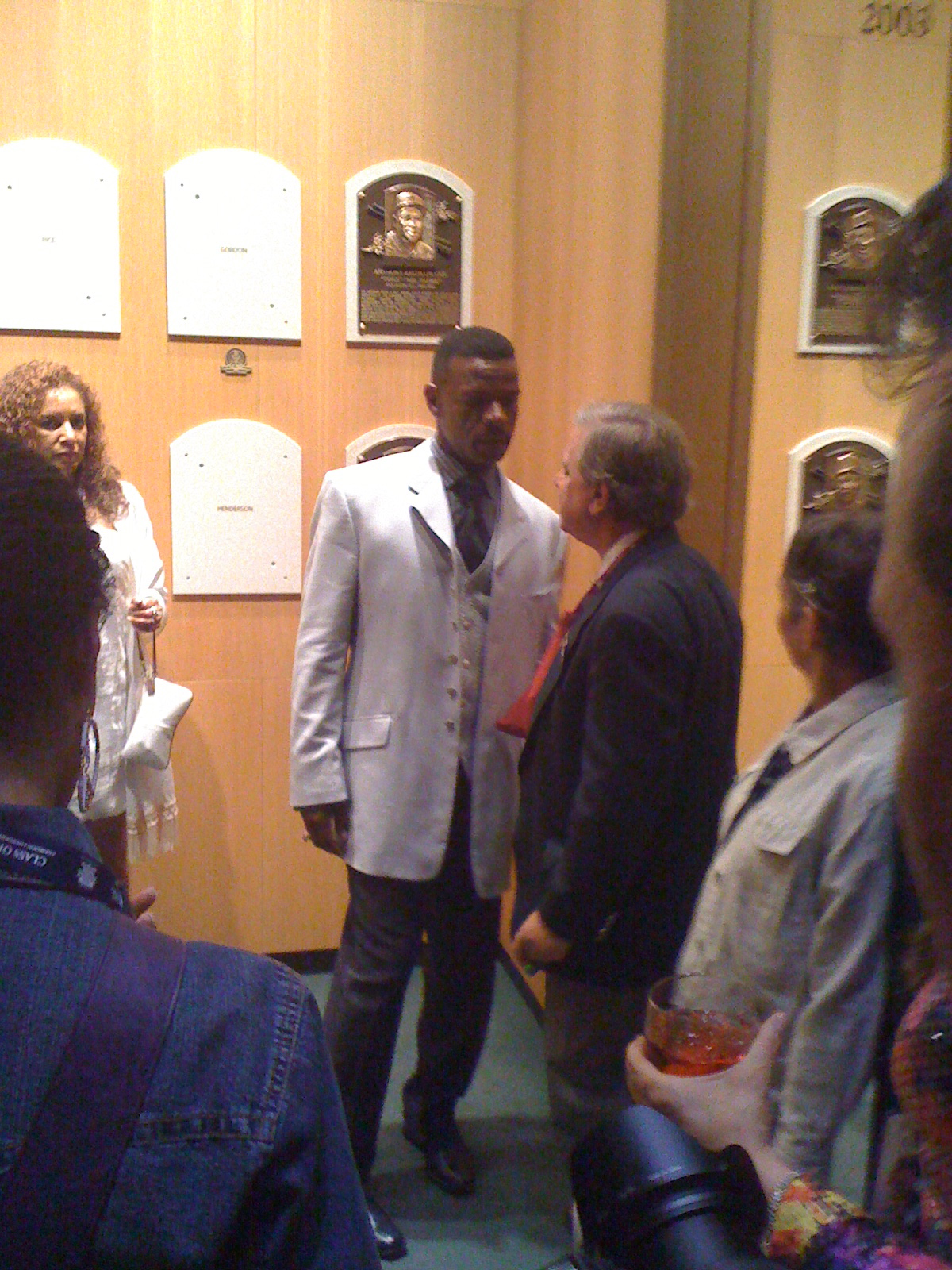
One image from the off-the-record proceedings merits inclusion, and stays within the rules (it was fully covered by the Hall’s official on-the-record photographer): That is indeed Rickey Henderson posing not by his plaque, but by where, within hours, his plaque will be, next to Jim Rice and Joe Gordon, in the class of 2009:
IMG_0877.jpg

Cooperstown: Saturday Evening

Had the great pleasure of joining the family of 2009 Frick Award Winner Tony Kubek on its private tour of the Hall (and lunch) and while private means private, I can share some of the artifacts and one very nice family image.
IMG_0864.JPG
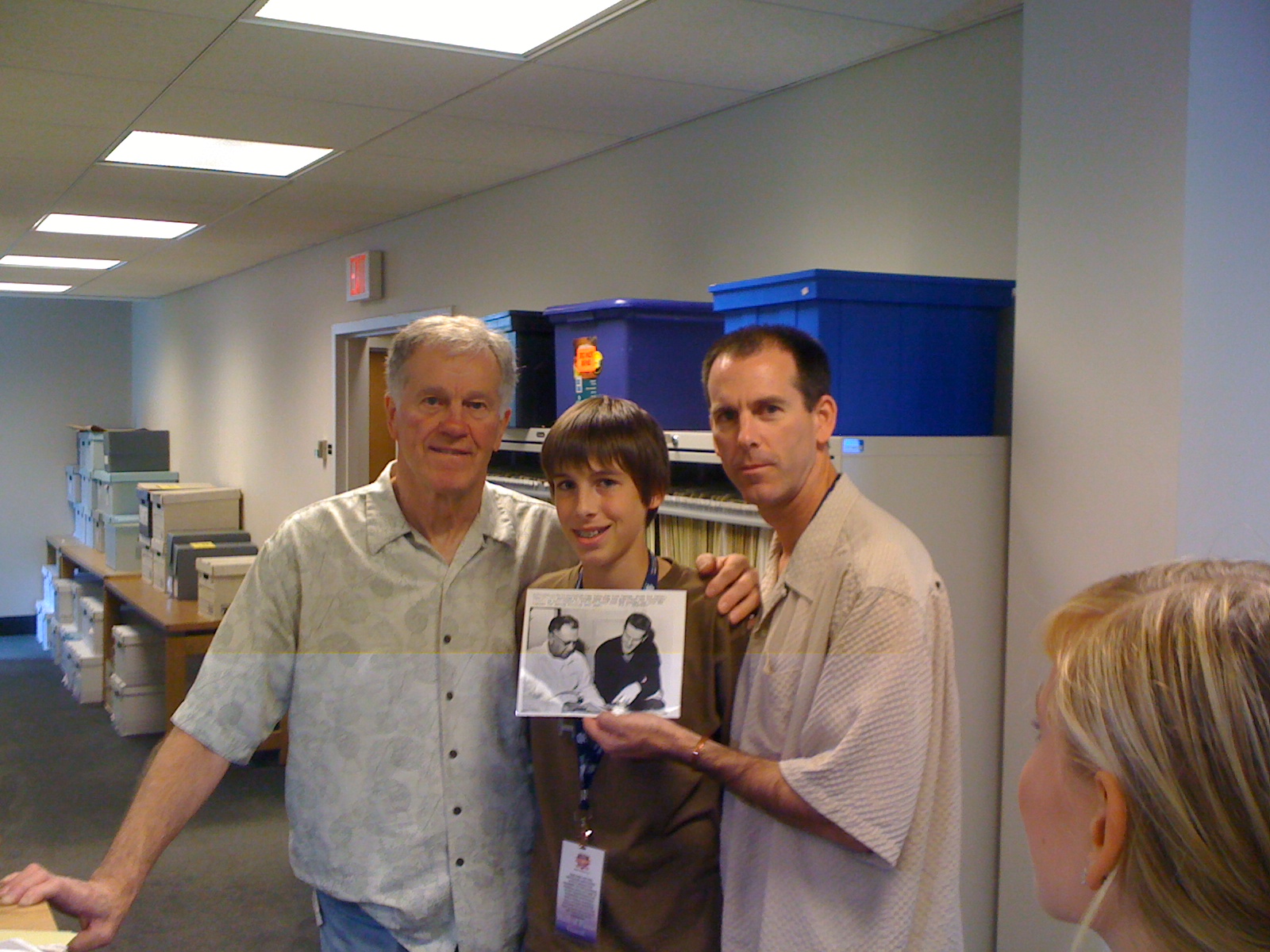
How many Tony Kubeks are in this photo?
That is the great Yankee shortstop Tony Kubek, Jr, on the left, of course, and his son, Tony Kubek III on the right, and in between them, Tony Kubek IV. The photo they have picked up is of the first Tony Kubek, congratulating his son the Yankee during his World Series triumphs in their native Wisconsin in 1957. The Hall prides itself on a file on literally each of the 17,000 or so players who’ve performed in the majors since 1871 (to say nothing of a few thousand more on executives, broadcasters, and even famous fans), and it gave the Kubeks a chance to look at Tony’s. The inductee himself stood by with a kind of patient stoicism, while insisting we should be looking at all the other neat stuff. 
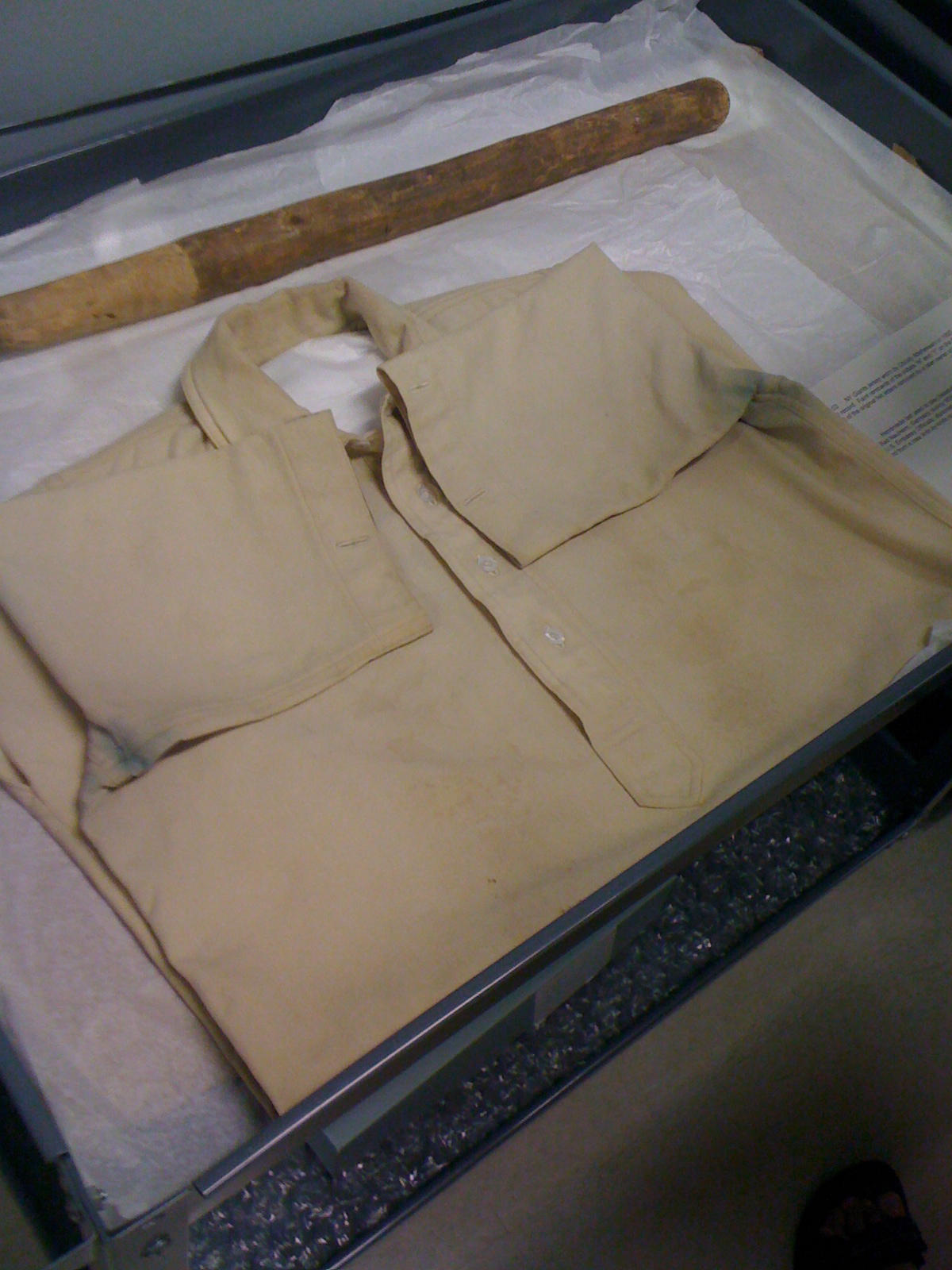
Such as this Shroud of Turin-like object, the importance of which Hall curators didn’t even fully comprehend until last year.
IMG_0857.jpg
That, they thought, was some vintage sandlotters’ uniform, circa 1900. It had been labeled such for all the time it had sat inside the Cooperstown collection. Then the light hit it just right, and what seemed to be a murky discoloration on the right breast, just below where the sleeve is folded, revealed itself as the outline of a “Y.” 
A similar “N” was found on the left, and certain other characteristics (like the buttons for converting the sleeves from short to long) became evident. That was a 1905 New York Giants’ uniform – the letters had simply come off, or been taken off, in the interim. In fact further investigation proved it was Christy Mathewson’s 1905 uniform. Not the one he wore during his three World Series shutouts that fall, but his regular season model.
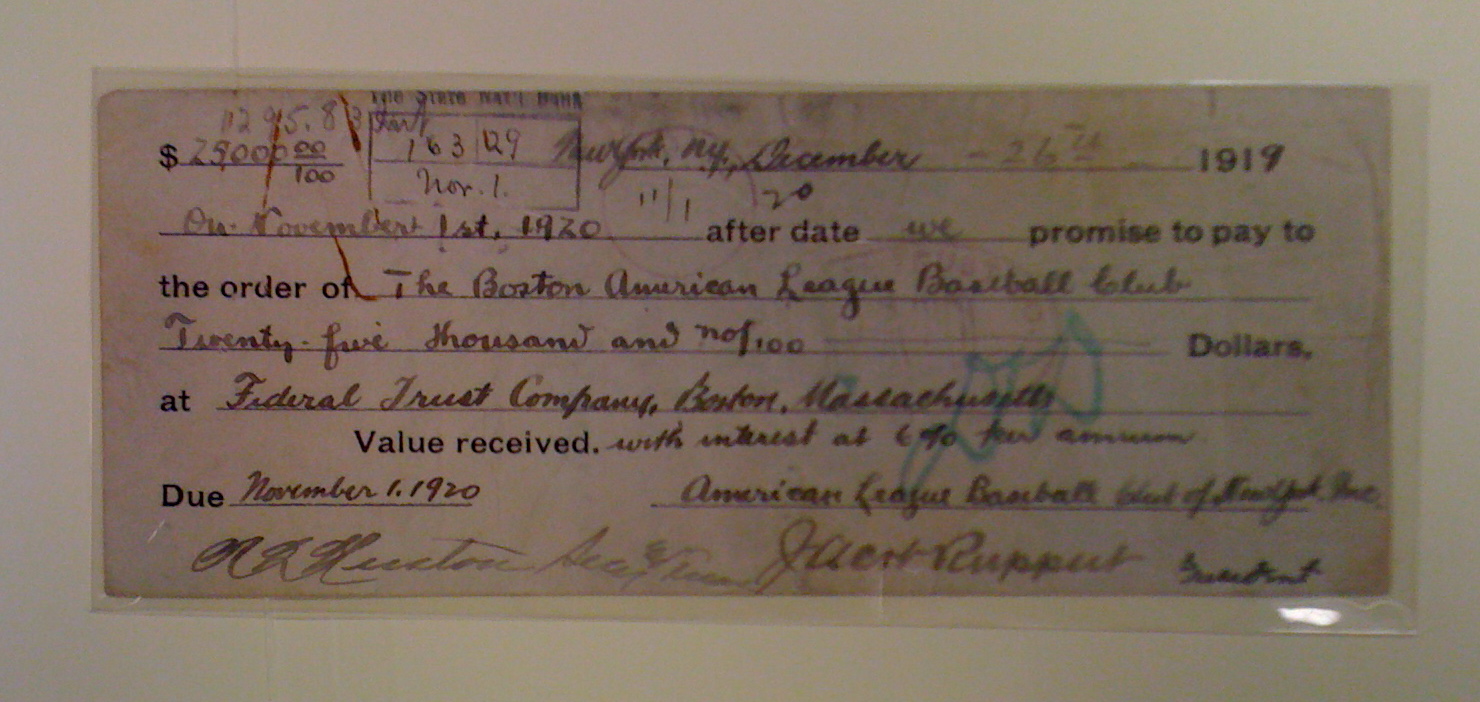
Here’s another relic, a little blurry, and not for the faint-of-heart Red Sox fan:
IMG_0862.jpg
Yep, promissory note, from Yankees’ owner Jacob Ruppert to Red Sox owner Harry Frazee, for part of the sale price of… Babe Ruth. The front signatures are Ruppert (r) and Tillinghast L’Hommedieu Huston (Ruppert’s less vocal partner – even though his middle name translated as ‘The Man God’). On the back is Frazee’s endorsement, plus five cents in official document tax stamps, used to retire the debt from World War One.
Thus you are looking at what you get when you sell your soul.
The Mathewson shirt (there was also a 1930-era Babe Ruth brought out for our gasping pleasure) is part of a vast collection, kept in archival quality boxes stacked atop each other. They were not just major leaguers’ – there were half a dozen at least from the All-America Girls’ Baseball League of the ’40s and ’50s – and they were certainly not all Hall of Famers’, which brings us to this anomaly of an image.
IMG_0859.jpg
So Pete Rose is in the Hall of Fame – boxed between Jackie Robinson and Al Rosen.
Which causes my mind to wander off the point, and the famous Rose joke from the early ’80s that enabled card collectors and memorabilia dealers to be the first to sense something was very wrong with Pete’s finances. Collector goes up to a uniform dealer and asks for a game-worn Rose jersey.
Buyer:  He wore all these in games?
Dealer: Yep.
Buyer:  There are a lot of them. I can’t decide
Dealer: Well. Cincinnati, Montreal, or Philadelphia?
Buyer:  Uh, Cincinnati
Dealer: Home or Away?
Buyer:  Um, home?
Dealer: ’60s vest style or ’70s-era doubleknit?
Buyer:  Doubleknit
Dealer: What size would you like?
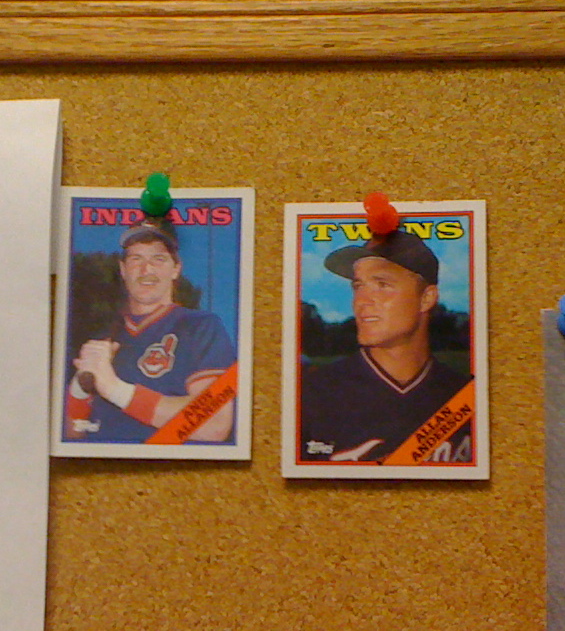
This last item is not from the priceless archives, nor the temperature-controlled storage vaults beneath the public displays, nor was it gingerly handed to us by Exhibitions and Collections Director Erik Strohl, but it was as wonderful a find as I could’ve had. Two 1988 Topps cards, tacked up to a cork board in the librarians’ main area, reflecting at once the difficulties of baseball research and record-keeping, and its sheer silliness:
IMG_0865.JPG
Yep. Andy Allanson, and Allan Anderson. A beautiful kind of symmetry.
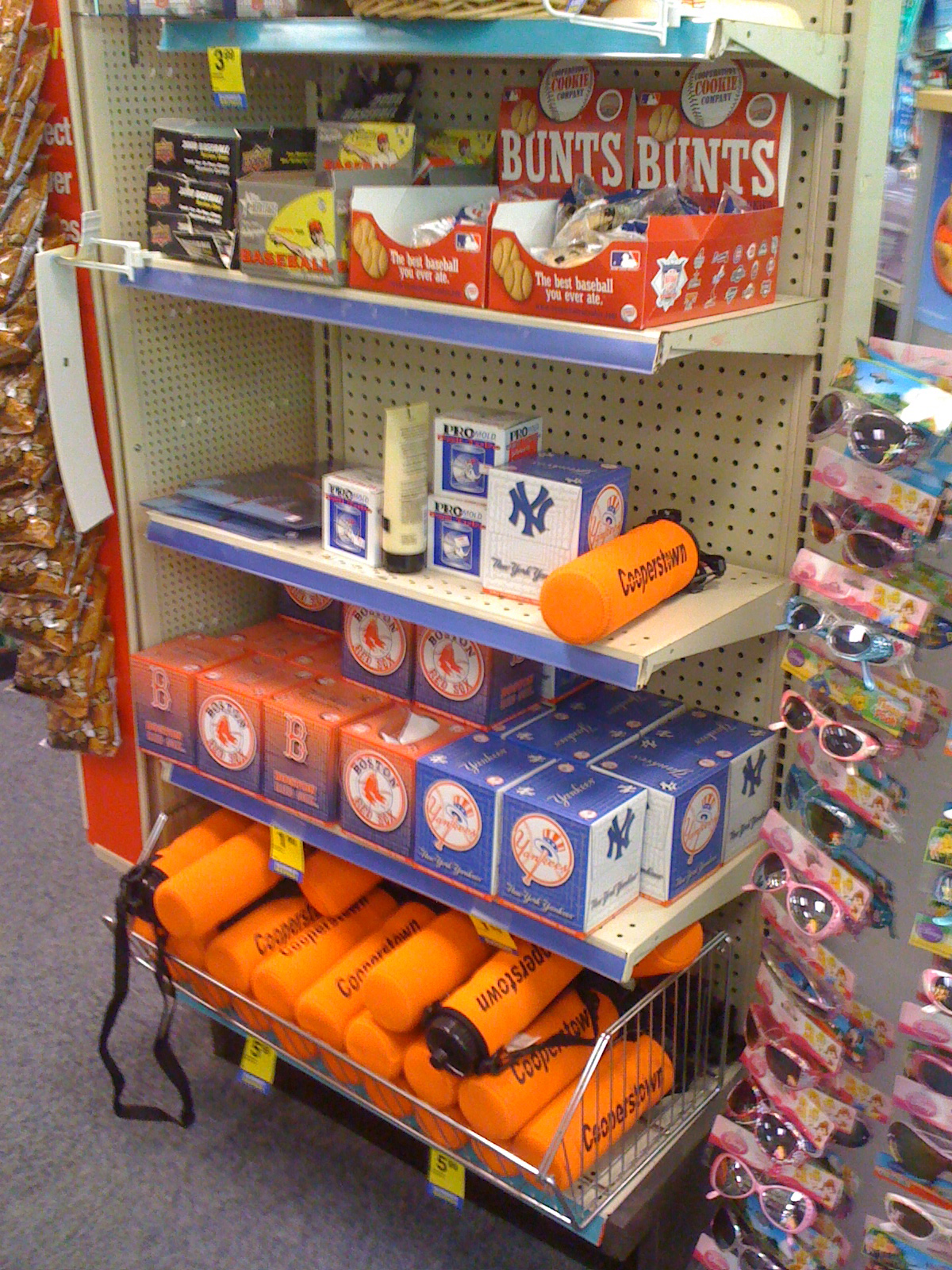
And this brings me to the last and saddest of the imagery. It is not in the Hall, but rather, in a CVS Drug Store nearly directly across the street from the Hall. It is not in front of the CVS, where Bob Feller was signing autographs when I last walked by, ninety minutes or so ago. It is not even in the front of the CVS. It is in the back, near the tissues.
IMG_0870.jpg
There. Third shelf from the bottom, below last year’s baseball cards, and the boxes of Red Sox brand tissues. To the left.
Take a closer look.
IMG_0871.JPG
Oh Holy Toledo Mudhens – it’s a pile of autographed 8 x 10’s of ex-Giant and Yankee John “The Count” Montefusco. Your cost? $4.95 each. The prints themselves probably cost 50 cents apiece, and rigid photo-holders that size are worth just about that. Meaning “The Count’s” Amount is down to about four bucks at the CVS in Cooperstown. And they were not flying off store shelves.
Fame is fleeting.
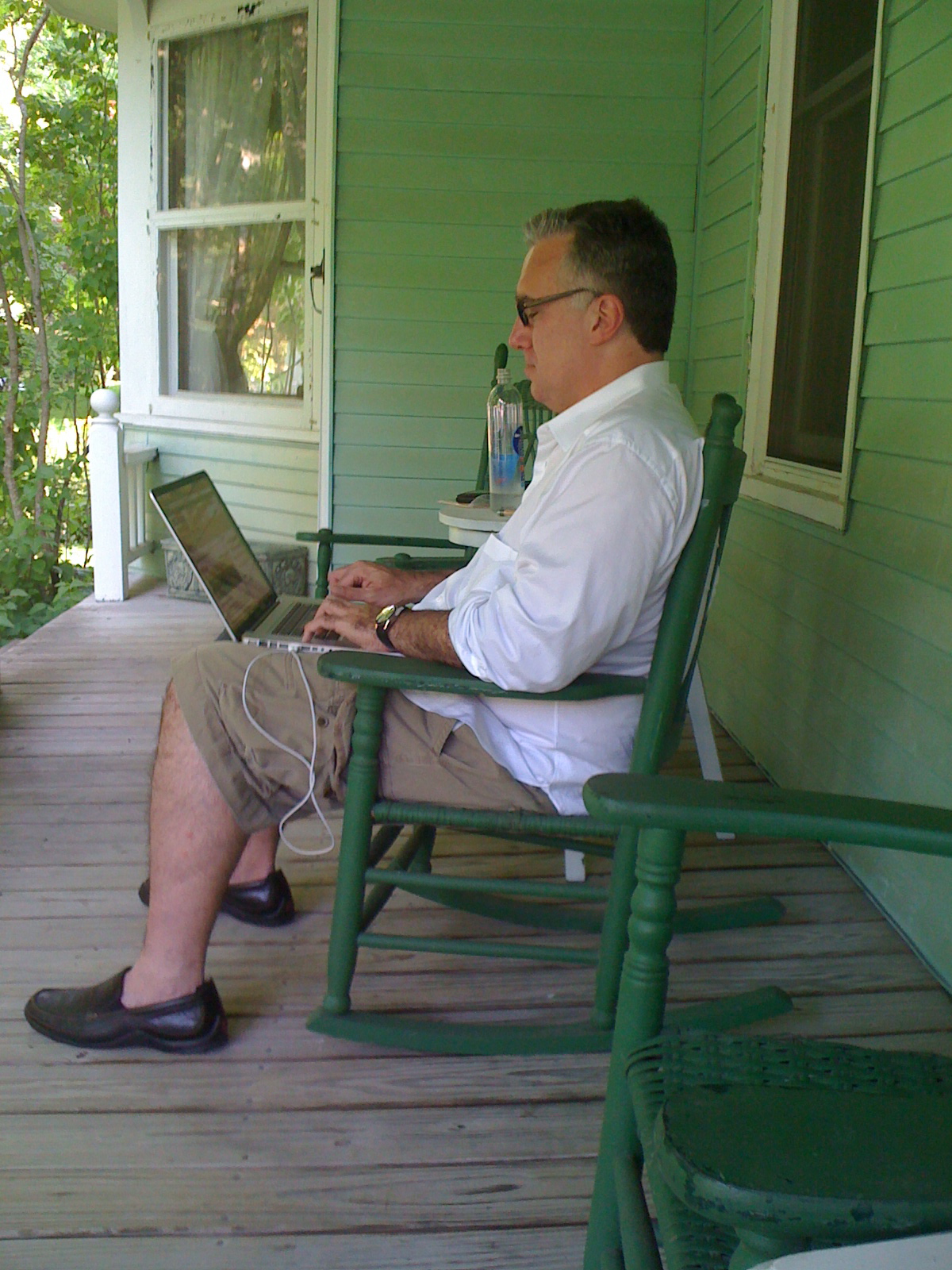
And with that, this is your faithful correspondent signing off from blog central, on the front porch,
on one of the prettiest streets of the Democracy, until an update after tonight’s big soiree or tomorrow morning’s pre-induction mayhem.
IMG_0874.jpg

Cooperstown: Saturday

Well, if this is what grew during yesterday’s serial monsooning, it was worth it. 

A spotless day greets the gathered and there is nostalgia at every corner. Since the facility is now 70 years old, for many of us here there is a huge connection not just to baseball’s collective past, and our own histories at games or in front of televisions, but directly to our own childhoods. Countless among those to who I’ve spoken are those who say they first came here as kids. Thus are the memories and emotions not just about Babe Ruth and Jim Rice, or Satchel Paige and Rickey Henderson, but about Mom and Dad, too.
Though I was here three times before I turned fifteen years old, I haven’t been back since 1973. Our first trip was so long ago – 1966 – that I was too young to have interest in the game, let alone the place. All Cooperstown meant for me was getting to see the Cardiff Giant, the great Barnum Hoax of the 19th Century (a long wooden object, not very convincingly painted to look like a mummified human, that they fell for in droves in the 19th Century but literally could not fool a seven-year old 70 years later). By the time we came back in 1968 I was the fully-grown nerd you see today. I remember coming close to hyperventilation upon my arrival, and of my plan to recreate the Hall in my basement by utilizing the postcards they sold depicting every plaque.
The 1973 visit was most memorable because my family basically enjoyed upstate New York while leaving me to walk from our hotel to the Hall each morning after breakfast and go and ensconce myself in the Library. I had been annoyed that there was no catalogue of coaches – everybody else including the umpires had an all-time list – so I decided to make one. The librarians took me seriously, and demanded as payment a copy of my final results. A friend published it in “book” form (I always use the quotations; it might have sold 50 copies) and I believe there’s still a copy in the Library here. The simple joy of research in an endlessly fascinating field, surrounded by like-minded and patient adults, cannot be overstated.
And each day I got to walk to and from that place via these almost rural streets. It seemed to me then a fitting adult life and, as I file this – I’m about to take that walk again.

The Cooperstown Flood

Greetings from Cooperstown, New York, where baseball did not begin, but where it could conceivably end Sunday at what could easily wind up being the first-ever underwater Hall of Fame Induction Ceremonies.
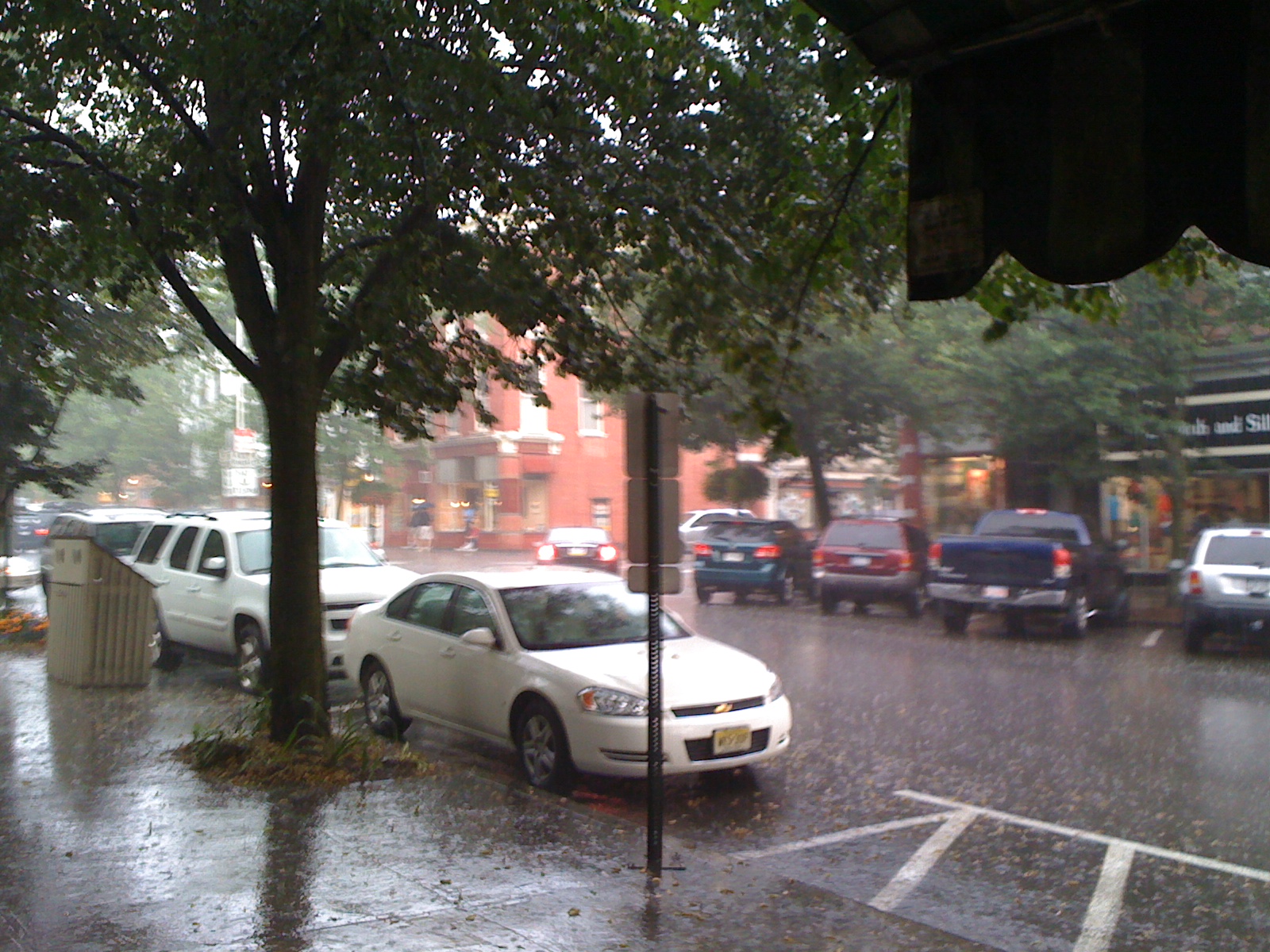
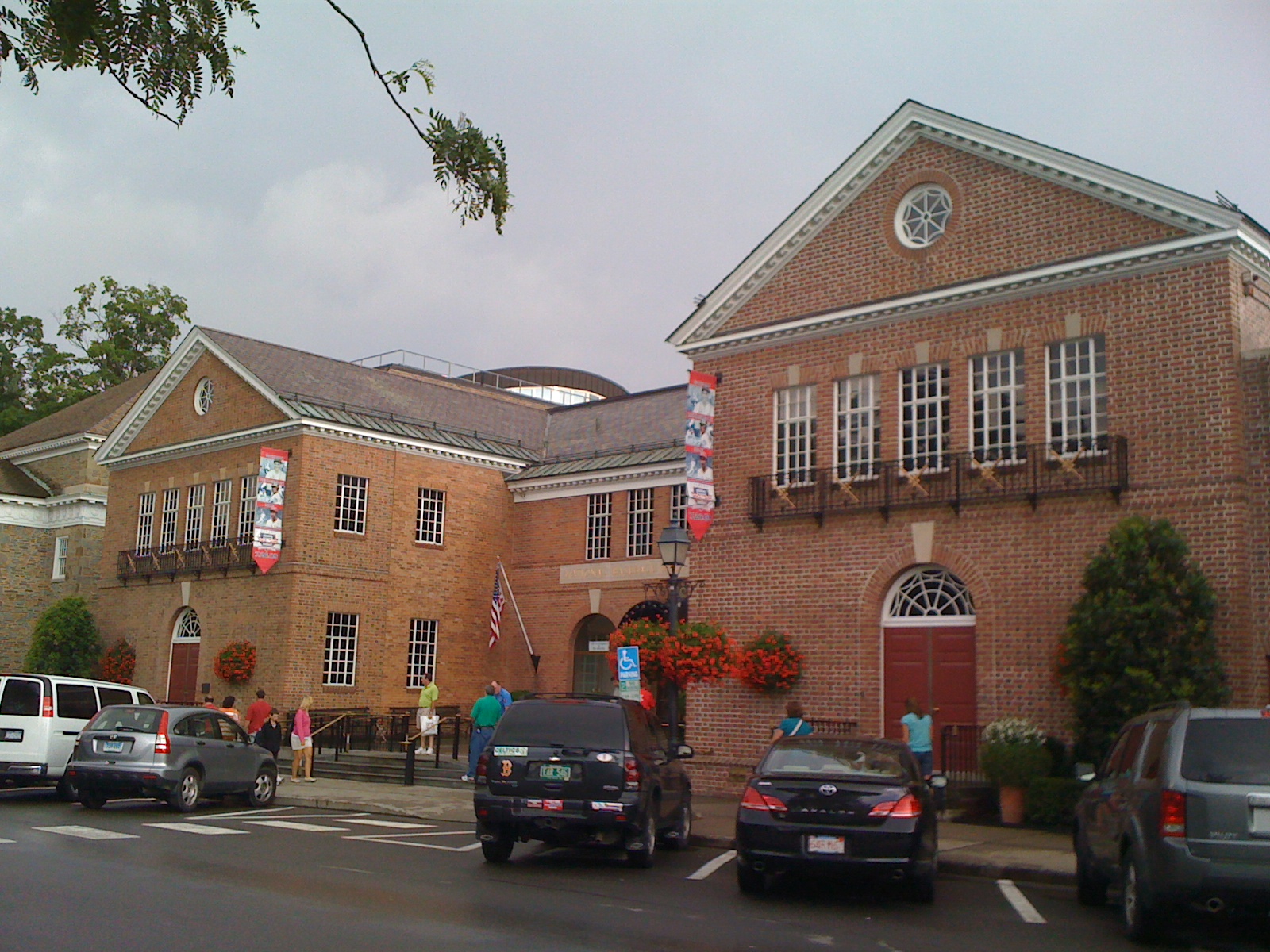
At least seven separate cloudbursts drenched this quaint village and the surrounding “Leatherstocking” district of the James Fenimore Cooper works, and the only hope is that the forecast for Sunday (rain, possibly thunderstorms) will be as inaccurate as today’s was.
Here is Main Street, Cooperstown, at about 6:00 PM, during what all official and unofficial weather outlets insisted was “72 and Mostly Sunny”:
IMG_0852.JPG
This was at about the point where this, the sixth rain, started to hit hard enough to blow the dirt out of the planters next to the shops.
Thus were the hottest commodities in this stretch of American commercialism that rivals any four blocks in the nation, not Jim Rice jerseys nor Rickey Henderson t-shirts nor even Pete Rose autographs (he’s here again), but, simply, umbrellas. One woman was overheard delighting in the red bumbershoot, matching her favorite team’s colors. “Now all I have to do is draw an ‘F’ on it for ‘Phillies.'” She paused. “No, a ‘P.'”
Here is the Hall of Fame itself, the last time I got close enough to confirm it was still there.
IMG_0847.JPG
And overheard moments later, from one of the people in the foreground, the early frontrunner for quote of the weekend: “Where’s the Chinese food again?”
That, of course, is until Sunday’s speeches, whether they are conducted outdoors, indoors, or on an evacuation raft. Rickey Henderson will necessarily be fabulous; the long-suffering Jim Rice has been underrated both for his speaking and the depth of his thought; and, it will be fascinating to hear Joe Gordon’s daughter – who claims her father never spoke of the game at home – accept on behalf of a second baseman whose career parallels that of Ryne Sandberg (except for Gordon’s five World Series rings). But the sleeper bet for best speech is from Tony Kubek, the Ford C. Frick Broadcasting winner, whose prowess as a Yankees shortstop (they did not truly replace him until the ascent of Jeter) and fearlessness and insight as an NBC, Toronto Blue Jays, and Yankees announcer, were never fully appreciated until he suddenly left the game in protest of the materialism that seemed to have reached a tragic peak around the time of the 1994 strike, and the owners’ cancellation of The World Series.